Interview: Shama Ko on the Power of Community and Building Girls in Gis

When Shama Ko first stepped onto the mats, she never imagined she’d one day help lead a national movement for women in Brazilian Jiu-Jitsu. But that’s exactly what happened. As the founder and program director of Girls in Gis, a nonprofit that hosts women’s BJJ events across the U.S., Shama has created a space where thousands of women have trained, connected, and grown together. We sat down with her to talk about community, growth, and what makes this project so powerful. BJJ Girls Mag: For those who don’t know, what is Girls in Gis and how did it start? Shama:Girls in Gis is a community for women in Brazilian Jiu-Jitsu. It started in 2009 as a simple open mat for women to train together in Texas. Back then, it was rare to find other women on the mats. I wanted to create a space where women felt comfortable, supported, and empowered — and that’s how it began. BJJ Girls Mag: What was the turning point where you realized this could be bigger than a local event? Shama:Honestly, the turning point was seeing how women showed up for each other. After the first few events, we noticed that women were driving hours just to attend. They were craving that sense of community. That’s when I knew we had something special, something that was missing in the sport. BJJ Girls Mag: What makes a Girls in Gis event different from a typical class or seminar? Shama:Our events are 100% focused on connection and community. They’re not just about technique, although we definitely share great instruction. There’s no hierarchy, no competition. Everyone is welcome, from day-one white belts to high-level black belts. It’s about sharing the mats and lifting each other up. BJJ Girls Mag: Do you think women experience Jiu-Jitsu differently than men? Shama:Absolutely. Women often come to BJJ with different goals: self-defense, confidence, healing. Many also carry trauma or hesitations that can make the academy setting intimidating. That’s why community spaces like Girls in Gis are so important. We make room for those emotions, and we normalize the journey. BJJ Girls Mag: You’ve helped thousands of women step onto the mats. What advice would you give someone who’s nervous about starting BJJ? Shama:Be patient with yourself. You don’t have to be strong, fast, or fearless to begin. Just start. Find a space where you feel safe and supported, that’s everything. And don’t be afraid to ask questions or to take up space. You belong here. BJJ Girls Mag: How can women get involved with Girls in Gis or attend an event? Shama:They can visit our website girlsingis.com, we post all upcoming events there. We’re always updating our calendar and expanding to new locations. Most of our events are donation-based, so finances aren’t a barrier. We also have volunteer opportunities and ways to support even if you can’t attend. BJJ Girls Mag: What’s next for the project? Shama:Our focus is always on growing the community. That means reaching more women, building new partnerships, and continuing to provide a safe, inclusive space. We’re also working on more educational content and leadership development for women in BJJ. It’s exciting to see where this can go. This Is What Empowerment Looks Like Shama Ko’s story is proof that one idea, driven by compassion and purpose, can grow into something massive. Girls in Gis is not just an organization — it’s a movement. And it’s changing the face of women’s Jiu-Jitsu in the U.S. 💬 Have you ever attended a Girls in Gis event? Share your experience with us or tag @bjjgirlsmag_usa in your photos. 📍 Learn more at www.girlsingis.com
Starting BJJ in Your 30s or 40s: What to Expect as a Woman

If you’re in your 30s or 40s and thinking about starting Brazilian Jiu-Jitsu, you’re not alone, and you’re not too late. In fact, this stage of life can be one of the best times to begin. Still, it’s completely normal to feel nervous about stepping onto the mats, especially in a sport that’s often portrayed as intense, male-dominated, and physically demanding. This guide will help you understand what to expect and how to navigate your early training with confidence, clarity, and care. You’re Not “Too Old”, You’re Just on Time First things first: you’re not too old to start BJJ. Not even close. Many women begin training in their 30s, 40s, or even later and thrive. Unlike other sports where age is a barrier to entry, BJJ welcomes people of all ages and backgrounds. It’s a practice that values technique, patience, and consistency over youth or brute strength. What you might lack in flexibility or cardio at first, you’ll more than make up for with focus, discipline, and emotional maturity. These qualities often give adult beginners a surprising advantage on the mats. Yes, It’s Normal to Be Afraid of Getting Hurt One of the most common concerns women have when starting BJJ later in life is the fear of injury, especially when training with men. You might be worried about being accidentally hurt by a stronger partner, feeling out of place or underestimated, or not being able to keep up physically. These feelings are valid. But the good news is: most well-run academies prioritize safety, especially for beginners. Classes usually start with controlled drills and progress gradually. You won’t be thrown into intense sparring on your first day or even your first month. That said, choosing the right academy makes all the difference. Look for one with a strong beginner program, instructors who respect boundaries, and a culture that values safety over ego. (You can read our full guide on how to choose your first BJJ academy here.) Women-Only Classes Can Be a Game-Changer If you’re feeling nervous about training with men, you’re not alone. Many women have that hesitation, especially at the beginning. That’s why women-only classes are such a great option. These sessions offer a space where you can learn at your own pace, train with other women, ask questions without pressure, and feel physically and emotionally safe. Many women use these classes as a stepping stone. They start out in women’s sessions, build confidence, and eventually transition into the co-ed classes once they feel more comfortable. And more often than not, they realize it’s not as intimidating as they feared. It’s just about choosing the right training partners and speaking up when needed. Choose Your Training Partners Wisely When you do start joining mixed classes, who you train with matters just as much as where you train. As a beginner in your 30s or 40s, your goal is to learn, not to prove anything. That means you shouldn’t be afraid to say no to sparring with someone who feels unsafe or overly aggressive. Ask instructors for pairing suggestions. Look for partners who are controlled, technical, and supportive. The best training partners will help you grow without pushing you beyond your limits. BJJ Is Family-Friendly — Literally If you’re a mom, you might be wondering how to balance training with family life. What many women discover is that BJJ actually fits in beautifully with a family routine. In fact, it’s common for moms to bring their kids to children’s classes, stay and train in the adult class afterward, and turn BJJ into a shared family activity. Training together can strengthen bonds, create shared goals, and help model healthy habits — especially for daughters. And in many academies, the community becomes an extension of your support system. Expect to Move Slower — And That’s Okay Your body in your 30s or 40s may not move the same way it did at 18, and that’s completely fine. You may need more time to warm up. You may recover a little slower. You may even sit out some rounds. That doesn’t make you weak. It makes you smart. The key is to listen to your body, pace yourself, and focus on longevity over intensity. Consistency, not perfection, is what leads to progress in BJJ. Many women find that BJJ helps them improve mobility, increase strength and endurance, relieve stress and anxiety, and reconnect with their bodies in a powerful, positive way. Your Journey, Your Pace One of the most beautiful things about starting BJJ later in life is that you’re doing it for you. Not for approval, not for competition, not for anyone else. You’ll likely find that you don’t compare yourself to others as much, you value small wins more deeply, and you’re training for health, not ego. And most importantly, you’re setting an example. Whether it’s for your kids, your friends, or other women watching from the sidelines — you’re showing that it’s never too late to begin something bold. Final Thoughts Starting BJJ in your 30s or 40s is not just possible — it’s powerful. You bring life experience, emotional maturity, and a strong sense of self to the mats. With the right academy, the right support, and the right mindset, you’ll discover that this journey is as much about personal growth as it is about technique. Whether you’re doing this for fitness, self-defense, mental health, or fun: you belong here.
How to Choose Your First BJJ Academy (As a Woman)

Starting Brazilian Jiu-Jitsu can be one of the most empowering decisions you ever make, but finding the right academy is just as important as stepping onto the mats for the first time. Not all gyms are created equal, and as a woman entering a male-dominated space, there are a few extra layers to consider. This guide is for women who are looking for a healthy, respectful, and supportive environment to begin their BJJ journey. Whether you’re completely new to martial arts or coming back after a long break, here’s what you should keep in mind before choosing your first academy. Look for Female Leadership and Representation One of the most impactful things you can do is choose a gym where women are visible, not just as students, but also as instructors, coaches, and role models. An academy that includes black belt women in its leadership or coaching staff often reflects a culture of inclusivity and respect. It signals that the environment is not just open to women, but actively values and invests in their development. Even if you don’t end up being coached directly by a woman, simply training alongside female role models can make a huge difference in how comfortable and supported you feel. Also, look for schools that offer women-only classes. These sessions can be a safe space for learning, especially in the beginning, when the close-contact nature of BJJ can feel overwhelming. They can also be a great place to build friendships and connect with others who share similar concerns and goals. Investigate the Culture, Not Just the Curriculum Every gym has its own vibe, and culture matters more than technique when it comes to long-term commitment. Before you sign up, do your homework on how the gym treats its members, especially women. Start by asking: Does the gym have a code of conduct? Is there a clear policy on harassment or misconduct? Are students encouraged to report uncomfortable situations? Search the gym online to see if there are any past incidents involving inappropriate behavior, misconduct, or lack of safety. Talk to other women who train there, if possible. Their experiences will tell you more than any website ever could. Unfortunately, stories of sexual harassment, manipulation, or toxic behavior in martial arts are not uncommon. As a woman, you have every right to train in a space where you feel safe, respected, and free from judgment. Ask About Trial Periods — and Actually Use Them Many gyms offer a free class or week, but that’s not enough time to truly understand the environment. If possible, ask for a longer trial period — two to three months — before committing to a long-term contract. Why is this important? Because during those early weeks, you’ll begin to notice: How instructors interact with different students Whether women are treated equally and with respect If boundaries are respected during drills and sparring Whether you feel safe speaking up or asking questions A gym might look perfect on social media, but training there in real life will show you what really matters: the day-to-day culture. This time allows you to build your own impression, without pressure. Consider the Community, Not Just the Instructors The instructors set the tone, but the students create the atmosphere. A healthy BJJ academy will have a community where people uplift each other: regardless of gender, rank, or skill level. When visiting or doing your trial, ask yourself: Do higher belts help beginners, or ignore them? Are people respectful during sparring? Is there a mix of age groups, backgrounds, and goals? Also think about your own goals: Are you training to compete? To get fit? To build confidence? Make sure the gym supports those goals. A competition-focused gym might be a poor fit for someone looking for a low-pressure, supportive environment — and vice versa. Trust Your Instincts, Especially as a Woman If something feels off, even if you can’t quite explain it, listen to your gut. You are not being dramatic. You are not “too sensitive.” You are protecting yourself. Red flags might include: Instructors making overly personal comments Students being pushy about sparring or rolling Inconsistent rules or lack of boundaries Comments that make you feel objectified or disrespected You deserve to train in a space that feels safe, professional, and empowering. If you leave class feeling anxious, disrespected, or unsure — that gym is not for you. Think About the Bigger Picture For some women, Jiu-Jitsu isn’t just about learning a martial art — it’s also about building a lifestyle, a new circle of friends, and even bringing their kids into the same space. If you’re a mother or plan to train alongside family, the academy should be a place that feels family-friendly and trustworthy. You want a gym where you’d feel comfortable leaving your child for a kids’ class and where your values as a parent and a woman are respected. That doesn’t mean the gym needs to be “soft.” It just needs to be safe. Final Thoughts: You Belong on the Mats Choose your first BJJ academy making sure you’re choosing the environment that will shape your journey in this sport. Don’t rush. Do your research. Ask questions. Observe. You deserve to train where you feel seen, respected, and empowered. The right academy isn’t just the one with the most medals or the flashiest Instagram page, it’s the one that will support you as you are, and help you become the strongest version of yourself. Take your time, trust yourself, and remember: you belong on the mats.
What Every Woman Should Know Before Starting Brazilian Jiu-Jitsu

If you’re reading this, chances are you’ve been thinking about trying Brazilian Jiu-Jitsu (BJJ) but still feel a little unsure. Maybe you’ve scrolled past some videos online or seen a local academy offering classes for women. You’re curious but hesitant. That’s completely normal. This guide will answer the most common questions and concerns women have before stepping on the mats. Whether you’re 18 or 48, here’s what you need to know before your first class. 1. You Don’t Need to Be in Shape to Start One of the biggest misconceptions is that you need to “get in shape first.” The truth is, Jiu-Jitsu will get you in shape. Most BJJ classes are structured to support beginners. You’ll build strength, endurance, and flexibility over time. Instructors are used to working with students of all fitness levels. It’s okay to take breaks and go at your own pace. Your progress will come with consistency, not perfection. 2. It’s Normal to Be (sometimes) the Only Woman in Class Depending on where you live, BJJ can still be male-dominated. Don’t let that discourage you. Many women start out as the only female in their academy. While that can feel intimidating, most reputable gyms foster a respectful and inclusive environment. Over time, more women tend to join as the community grows. If being around more women is important to you, look for schools that offer women’s-only classes or have female instructors. 3. You’re Going to Be Uncomfortable at First Jiu-Jitsu is close-contact by nature. You will be sweating, rolling, and often tangled up with training partners. That can feel overwhelming in the beginning, especially if you’re not used to physical contact with strangers. Give yourself time to adjust. The discomfort fades as you become more confident and focused on learning techniques. You’ll be surprised how quickly it becomes just part of the training. 4. Gear Matters, But You Don’t Need Everything on Day One For your first few classes, most academies will let you borrow a gi. If not, wear fitted workout clothes that won’t rip or get in the way. Eventually, you’ll want to invest in your own gear. A properly fitted women’s gi from brands like Tatami, Fuji, or Gold BJJ. A rash guard, especially for no-gi classes. A comfortable sports bra and compression shorts or leggings. A mouthguard can be helpful once you start sparring. Avoid loose t-shirts, jewelry, and makeup during training. Keep your nails trimmed and bring flip-flops to wear off the mat. 5. You Don’t Have to Spar Right Away Many beginners worry about “rolling” (sparring) on day one. In most academies, new students aren’t required to spar until they’ve learned the basic movements. If your gym does encourage it early on, feel free to decline or ask to observe. You are in control of your training. A good instructor will never pressure you to do something you’re not ready for. When you do start sparring, remember that tapping out is not a sign of failure. It’s part of learning and staying safe. 6. Your Progress May Feel Slow, and That’s Okay Jiu-Jitsu takes time. Unlike other martial arts, it can take 10 years or more to reach a black belt. Promotions are based on consistency, skill, and mindset, not attendance alone. At times, it will feel like you’re not improving. That’s when many people quit. Stick with it. Even if you train just twice a week, you’ll start to see small victories like escaping a bad position, remembering a move, or lasting longer during sparring. Progress in BJJ is not linear, but it’s always happening. 7. You’re Stronger Than You Think Most women who start Jiu-Jitsu discover an inner strength they didn’t know they had. Learning to defend yourself, control your body, and overcome fear builds confidence like few other activities. It’s not just physical. It’s mental. You’ll become more assertive, focused, and resilient in other areas of your life too. 8. Find the Right Gym for You Not every academy will be the right fit, and that’s okay. Look for a school that welcomes beginners, has a respectful and supportive culture, includes women on the mats or in leadership, and encourages learning over competition. Take advantage of free trial classes. Trust your instincts. If you feel uncomfortable or disrespected, keep looking. The right environment can make all the difference in your journey. From One Woman to Another Starting Brazilian Jiu-Jitsu as a woman can feel intimidating, but it’s one of the most empowering things you can do for your body and mind. The hardest part is walking through the door for the first time. After that, everything gets easier. Give yourself permission to be a beginner. You don’t have to be fast, strong, or fearless. You just have to show up. You belong on the mats.
Training BJJ During Your Period: What You Need to Know

If you’re a woman who trains Brazilian Jiu-Jitsu, you’ve probably faced this question at some point: should I train while I’m on my period? It’s a common concern, especially among beginners. The physical discomfort, mood swings, and fear of “accidents” can make you want to skip training altogether. But the truth is, many women train during their cycle—and feel even better for it. This article is for anyone who’s unsure, uncomfortable, or simply curious about how to navigate their menstrual cycle while staying consistent on the mats. Let’s talk about what really matters. Understanding Your Body First of all, your period is not a weakness. It’s a natural process that affects nearly half the population. What makes the difference is how you respond to it—and how you care for your body during each phase of your cycle. There’s no “right” answer when it comes to training during your period. Some women feel strong and energized, while others feel fatigued, bloated, or emotionally off balance. Listening to your body is key. You don’t have to push through pain or discomfort, but you also don’t have to assume you’re out of action just because you’re menstruating. Can You Train on Your Period? Yes, you absolutely can. Unless your doctor has told you otherwise, there is no medical reason to skip BJJ just because you’re on your period. In fact, many women report feeling better after training. Physical activity can help reduce cramps, boost mood, and ease bloating. Moving your body improves blood flow and releases endorphins, which can counteract the hormonal fluctuations that make you feel low. That said, you don’t have to go 100%. You can choose to skip sparring and focus on drilling or positional training. Or just show up, stretch, and stay connected with your training partners. Consistency doesn’t mean intensity every day. What to Wear (and Not Wear) Choosing the right training gear can make a huge difference in how confident and comfortable you feel. Opt for dark-colored spats or leggings with a long rash guard or gi. Dark colors help hide any accidents, and tighter clothing keeps your pad, tampon, or cup in place. Here are some common protection options: Tampons: Discreet and allow for full range of motion, but they must be changed regularly. Menstrual cups: Eco-friendly and leak-resistant when positioned correctly. Popular among female athletes. Period-proof underwear: A newer option that can be worn alone or with other methods for extra protection. Pads: Not ideal for intense training as they may shift, but can work during light drilling. Choose what makes you feel safest and most secure. The goal is to focus on training—not on constantly worrying about your body. Talking to Your Coach or Teammates You don’t have to tell anyone you’re on your period—but you can, if it makes things easier. Some women let their coach know, especially if they want to skip sparring or adjust their training for the day. Others simply avoid certain positions or partners without explanation. That’s perfectly fine. You have every right to protect your physical and emotional space. If a position feels uncomfortable or you’re just not in the mood to be squashed under 90 kg of pressure, speak up or tap early. That’s part of self-care. What About Pain and Fatigue? Let’s be honest: some periods are brutal. If you’re dealing with intense cramps, headaches, nausea, or fatigue, it’s okay to take a day off. Rest is productive too. But if your symptoms are manageable and you still want to train, try adjusting your routine. You don’t have to roll hard rounds or compete with anyone. Go light. Focus on technique. Or even use this time to observe and learn. Training through your period can actually help you become a more intuitive athlete. You start paying closer attention to how your body moves, reacts, and recovers. That’s a valuable skill. Emotional Shifts and Mental Health Many women experience mood swings or anxiety during their cycle. Jiu-Jitsu can be a powerful emotional outlet during these times. The mat is a space where you can clear your mind, connect with your body, and release tension in a healthy way. That said, don’t beat yourself up if you’re not at your best. You don’t owe anyone a perfect performance—least of all during a week when your body is going through so much internally. Being kind to yourself is a form of discipline too. Training Is a Choice—Not an Obligation One of the biggest takeaways is this: you don’t have to stop training because you’re on your period, and you don’t have to force yourself to train either. It’s your body. Your rules. Some days, you’ll surprise yourself with how strong and focused you feel despite the discomfort. Other days, you’ll just want to go home, curl up, and rest—and that’s okay too. Learning to train through your cycle is a process of trial, error, and acceptance. No one else can tell you what’s right, but hopefully, this gives you the confidence to find your own rhythm. Final Tip Always keep a small “period kit” in your gym bag. A clean pair of leggings, your preferred menstrual products, and maybe some pain relievers. Trust me—it’ll save your day more than once. Training while menstruating doesn’t make you less of a grappler. If anything, it proves just how tough and adaptable you are. Honor your body, respect your limits, and do what feels right for you. And if someone ever questions whether BJJ and periods “go together,” the answer is simple: they do. Because women don’t stop being women just because they train. We bring all of ourselves to the mat—and that includes our cycles.
Best BJJ Gi for Women 2026: Tested by a Black Belt

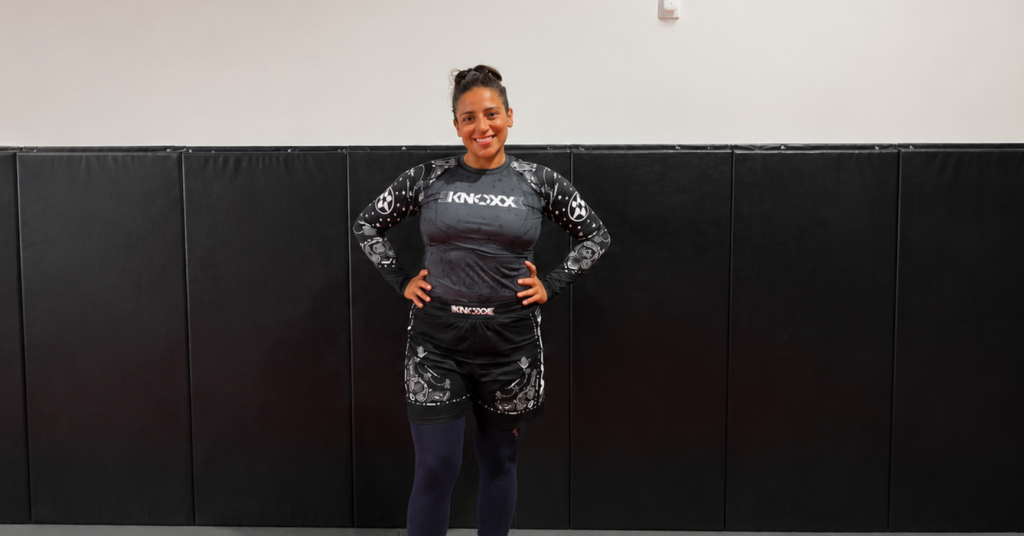
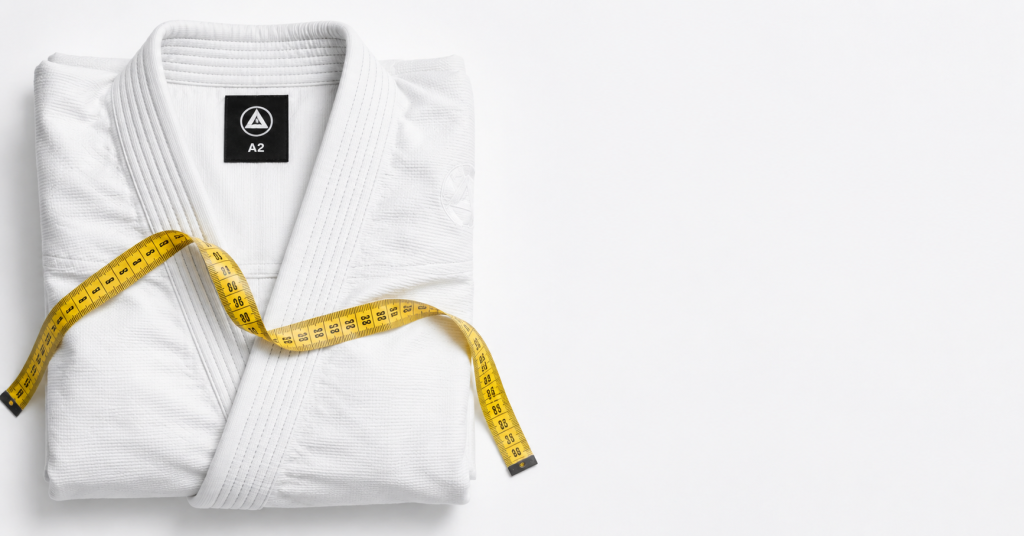
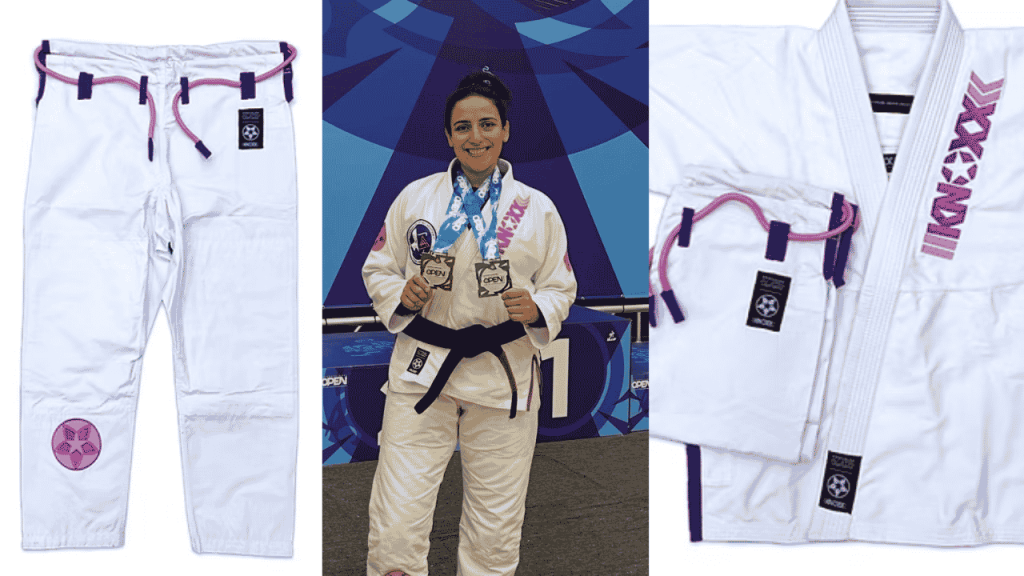
I’ve been training jiu-jitsu for over 10 years and earned my black belt on the mats, not behind a desk. This guide is built on real training time, not spec sheets. Every gi on this list has been worn through hundreds of rolls, washed more times than I can count, and tested in competition conditions. One brand has earned a permanent spot in my rotation: Knoxx Gear. Use that link for 10% off your order. Best Women’s BJJ Gis at a Glance Here’s how the top options compare before we get into the full breakdown. Gi Best For Weight Price IBJJF Knoxx Gear Best Overall / Curvy Fit ~450 GSM $$ ✓ Tatami Estilo (Women’s) Competition ~375 GSM $$$ ✓ Gold BJJ Ultralight Lightweight / Hot Gyms ~350 GSM $$$ ✓ Fuji Women’s All-Around Best Value ~550 GSM $ ✓ Venum Contender Best Budget ~550 GSM $ ✓ Shop Knoxx Gear — Use Code SAMFONSECA for 20% Off Why Women Need a Gi Designed for Women Most gis on the market are men’s gis in smaller sizes. The fit is wrong: too wide in the shoulders, too narrow in the hips, too long in the torso. After years of training in both, the difference is obvious. A gi cut for a female frame moves with you instead of against you. It doesn’t bunch at the sleeves during armbars. It doesn’t gap at the collar when you’re in guard. It just fits. That difference matters more than most beginners realize. A poorly fitting gi is a distraction every single roll. How We Tested These Gis Each gi on this list was worn for a minimum of 3 months, 3 to 5 sessions per week. I evaluated them on five criteria: fit across shoulders, hips, and inseam; fabric weight and breathability; durability after 50+ washes; IBJJF compliance; and value for price. We brought each gi to open mats, regular classes, and live sparring sessions before drawing any conclusions. We paid close attention to how seams held up after repeated washing, whether the collar maintained its structure after heavy choke attempts, and how much shrinkage affected fit after the first few washes. Best BJJ Gi for Women: Full Reviews Best Overall: Knoxx Gear Knoxx makes the best women’s gi I’ve trained in. The cut is designed for a female frame, not shrunk down from a men’s template. The fabric is lightweight but durable, the collars hold shape after months of washing, and the sizing is accurate. Pre-shrunk out of the box. If you’re buying one gi this year, this is it. Shop Knoxx Gear — 20% Off Best for Competition: Tatami Estilo (Women’s Cut) Tatami’s Estilo series is IBJJF-approved and comes in a true women’s cut. The lighter GSM makes it good for competition weigh-ins, and it’s widely trusted on the competition circuit. Not as tailored through the hips as Knoxx, but solid construction and a proven track record at regional and international tournaments. If you’re competing often and want a reliable second gi, Tatami is worth it. Best Lightweight: Gold BJJ Ultralight If you train in a hot gym or cut weight for competition, the Gold BJJ Ultralight is worth knowing about. At around 350 GSM, it’s one of the lightest IBJJF-compliant gis available. The ripstop weave holds up better than you’d expect for something this light, and it dries fast between sessions. Best Value: Fuji Women’s All-Around Fuji has been making reliable gis for a long time, and the Women’s All-Around is their most accessible option. It’s heavier at around 550 GSM, which means it runs warm but holds up extremely well over time. The women’s cut has a better hip-to-shoulder ratio than most budget options, and it’s IBJJF-compliant in white and blue. Best Budget: Venum Contender Venum is a name most combat sports athletes recognize, and the Contender holds up well given the price point. It runs heavier at around 550 GSM, but it’s durable and IBJJF-compliant. The fit skews toward a unisex template, so it works better for some body types than others. For someone just starting out who needs a functional gi without committing much money yet, it delivers. Best for Curvy Women: Knoxx Gear If you’ve struggled to find a gi that fits your hips and shoulders at the same size, Knoxx is the answer. Their sizing and cut accommodate a wider range of body types without sacrificing mobility. This is the most consistent feedback I hear from women who train: Knoxx is the first gi that actually fit without tailoring. Shop Knoxx — 20% Off What to Look For When Buying a Women’s BJJ Gi Fit and Cut The most important factor. A gi that fits wrong will frustrate you every roll. Look for women’s-specific cuts that account for hip-to-shoulder ratio. Avoid buying men’s gis in small sizes — the proportions don’t translate. Weight (GSM) Fabric weight is measured in GSM (grams per square meter). Lighter gis (350–450 GSM) are better for competition and hot gyms. Heavier gis (550+ GSM) last longer but feel warmer during training. Most all-around training gis sit around 450–550 GSM. IBJJF Compliance If you compete or plan to, verify the gi is IBJJF-approved: solid white, blue, or black color; correct collar thickness; patches only in designated areas. Most major brands are compliant — always confirm before buying specifically for competition. Durability and Stitching Quality A gi that falls apart after 30 washes is not a good investment. Check the stitch count along the lapel, under the armpits, and at the knee reinforcements. Double or triple stitching signals quality that will survive regular training. Also check whether the pants use a ripstop weave — it holds up significantly better under grappling friction. Women’s Gi Size Guide Most brands use A0–A4 sizing, but proportions vary significantly between brands. General reference: A0/A1: Under 130 lbs, shorter frame A1/A2: 130–165 lbs, average height A2/A3: 165–190 lbs or taller/broader frame When in doubt, size up. Most gis shrink slightly after the first wash even if