
ADCC 2026 Cut the Women’s Absolute, Pays Champions Half, and Won’t Explain Its Invites
ADCC quietly dropped the women’s absolute for 2026, pays a female champion half what a male champion earns, and has never published how direct invites are decided.
André Careca Case Reaches Brazil’s Public Prosecutor’s Office as Palms Sports Stays Silent
The case of instructor André Careca has reached Brazil’s Public Prosecutor’s Office, with a Record of Assistance registered under ref. MPRJ no. 202600209730. Palms Sports has not replied to any of the five formal communications sent by BJJ Girls Mag.
BJJ for Smaller Women: How to Beat Bigger Opponents
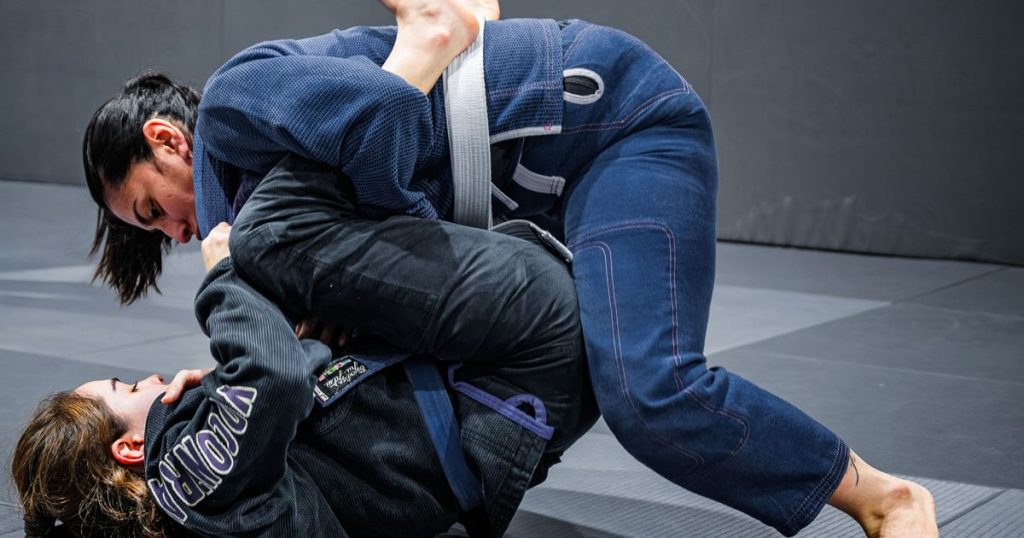
Most nights on the mats, we’re the smallest person in the room. That’s just the reality of BJJ for smaller women: you walk into a class where almost everyone outweighs you by 30, 50, sometimes 80 pounds, and you’re expected to figure it out. After more than a decade of training and a black belt earned rolling with people twice our size, we can tell you it’s not only survivable, it’s where jiu-jitsu actually gets interesting. This guide covers what genuinely works for small frames, what wastes your energy, and how to protect your body while you learn. The honest part first: size does matter You’ll hear “jiu-jitsu was made for the smaller person” in every academy lobby in the world, and there’s truth in it, since the art was famously built around leverage. What that slogan skips is the fine print. Between two people of equal skill, the bigger one usually wins, which is exactly why competitions have weight classes. So let’s set a realistic goal: technique won’t erase a 60-pound gap against an experienced opponent, but it absolutely closes the gap against untrained strength, and it beats bigger training partners who are a belt or two behind you in understanding. That happens every single night in academies everywhere, and it can be you doing it. Why the guard is your home base When someone heavy is on top of you in side control, their weight works against you every second. Flip that scenario: when you’re playing guard, your legs, the strongest levers you own, are between you and their weight. This is why almost every successful small grappler builds their game around the guard. Closed guard is the first priority. Learn to break posture and keep it broken, because a bigger opponent who can’t posture up can’t use their weight. From there, attacks that rely on your whole body against one of their limbs, like the armbar and the triangle, are your bread and butter. A triangle choke doesn’t care how much your opponent benches. Their carotid arteries are the same size as everyone else’s. As you progress, open guards that manage distance become gold for smaller bodies. Spider guard and lasso in the gi let you control a bigger person’s arms with your legs, and De La Riva gives you angles instead of collisions. The theme across all of them: your legs versus their arms is a fight you can win. Your arms versus their arms is not. Positions that favor a small frame Back control is the great equalizer, full stop. From the back, their strength has nowhere to push, they can’t see you, and your size becomes an advantage because you’re harder to peel off. Small, mobile grapplers often take the back in scrambles where a heavier person simply can’t move that fast. If you invest deeply in one dominant position, make it this one. Knee on belly and technical mount also reward lighter athletes more than people expect, since both rely on precise weight placement rather than total mass. And in transitions, speed is a weapon the big guys don’t have. The half-second where a 200-pound training partner is mid-turn is your window, and you’ll learn to feel it. The three traps that drain smaller grapplers The first trap is bench-pressing people off you. Pushing a heavier opponent away with straight arms from the bottom burns your shoulders, feeds them your elbows for attacks, and never actually works. Frames are different: a frame is your bone structure placed against their collarbone or hip so their weight is held by your skeleton, not your muscles. Learn the difference early and drill it forever, because escapes built on frames, bridges and hip movement will still work when you’re exhausted, and escapes built on pushing won’t. The second trap is matching strength in grip fights. If you grip fight a stronger person symmetrically, wrist against wrist, you lose. Grip smarter instead: two hands on one sleeve, break their grip before you build yours, and target the last two fingers where every grip is weakest. A good gi that fits properly matters here too, since sleeves that are too long give your partner free handles. Our women’s gi sizing guide covers how a proper fit removes those free grips, and if you’re still shopping, start with our guide to the best BJJ gis for women. The third trap is refusing to concede position. Sometimes holding a losing position against big pressure costs you more than giving it up and recovering guard. Experienced small grapplers give ground constantly, on purpose, and reset to positions where their game works. That’s not losing. In the long run it’s how you stop getting hurt. Energy is a technique A bigger opponent can afford to waste effort and still have plenty left. You can’t, so pace becomes part of your game. Explode only in the moments that decide something, like a scramble for the back or the second half of a sweep, and stay relaxed the rest of the round. Breathing through your nose during positional work sounds like a small detail until you try it and realize how much longer your rounds last. Watch the best lightweight competitors and you’ll notice they look almost calm until, suddenly, they don’t. Rolling with much bigger partners without getting hurt This part matters more than any sweep we could teach you. You get to choose who you roll with. A controlled, experienced big partner is often safer than a spazzy white belt who weighs 40 pounds less, because control is what causes or prevents injuries, not weight alone. If someone smashes with full force every round, you’re allowed to decline the roll, and any academy that punishes you for that isn’t an academy worth your monthly fee. Two habits protect your body. Tap early against big partners, especially on pressure and stacking positions, because bravery against 220 pounds is how ribs and knees get hurt. And talk before the roll: a simple “let’s flow,
Conor McGregor Visits AOJ. A Look Back at the Violence Cases and Sexual Assault Allegations Involving the Fighter Since 2018

Conor McGregor visited AOJ and the jiu-jitsu community celebrated. A look back at the court cases and allegations involving the fighter since 2018.
Fabiana Borges: From a Rio Social Project to Four Gracie Barra Schools in Texas, USA
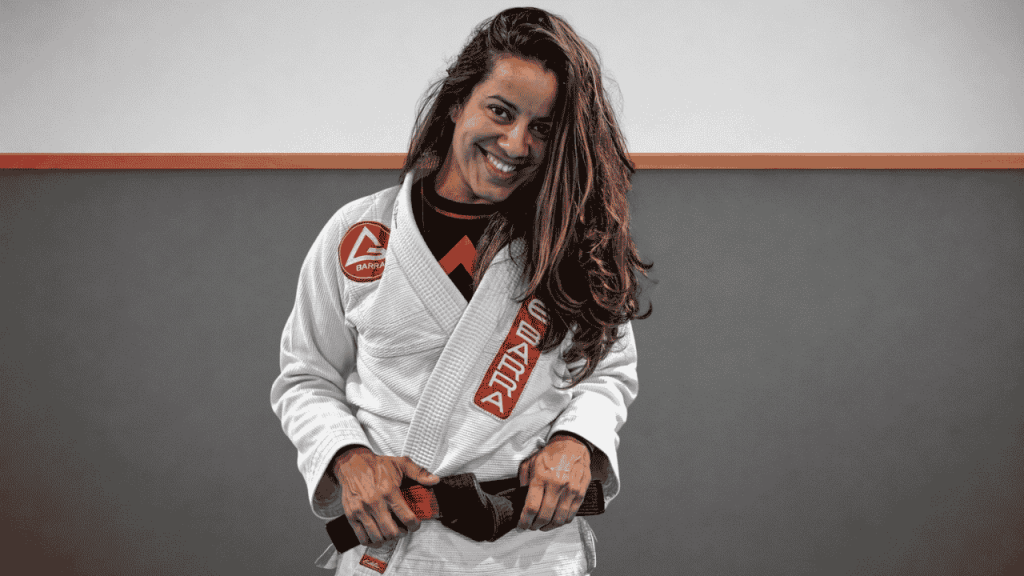
Fabiana Borges started jiu-jitsu at 11, in a social project in Cascadura, on Rio de Janeiro’s north side. Twenty-seven years later she is a fifth degree black belt, a six-time Brazilian champion and a two-time Pan American champion, and she runs four Gracie Barra schools in San Antonio, Texas. We sat down with her to talk about the whole road, from that first armlock to teaching at nine months pregnant. BJJ Girls: You started jiu-jitsu at 11, in Cascadura, in a social project. What was that first contact with the mat like, and what did jiu-jitsu mean to the girl you were back then? Fabiana: So, when I was 11, I was looking for a sport to do. I tried soccer, I tried running, volleyball, but nothing clicked with me. Then a social project opened near my house and my uncle took me and my cousin to train. In the first class I already felt a huge sense of empowerment in jiu-jitsu as a girl. I remember I pulled guard, swept, mounted, caught the arm. It was something I learned that day, and I still remember the feeling of my first armlock. It was a lot of empowerment, I liked it, and jiu-jitsu captivated me, it gave me that strength. It was a very striking moment, an 11-year-old girl looking for something to do, and it was really my own thing, wanting to do a sport. I took the registration form, went home, asked my father for 30 reais at the time to buy my kimono, signed up for jiu-jitsu, and from that day I never stopped. Jiu-jitsu has always been part of my life and it shaped who I am today. BJJ Girls: Back then, still in the late 90s and early 2000s, what was it like to be a girl training jiu-jitsu in Rio? Did you have other girls training with you, or were you almost always the only one? Fabiana: I started training in 1999, a long time ago. When I started there were other girls training, and since it was a social project it ran in several areas of Rio de Janeiro, so there were some girls. But they always came and went, came and went, because jiu-jitsu was pretty tough, pretty hard back then. I remember a teacher always said everyone is the same, there’s no difference between man and woman, so I think only the toughest ones stayed, and most only went as far as blue belt. Since I started at 11, a lot of the girls were like 14, 15, and the kids would stay until yellow belt and the grown women until blue, with a lot of turnover. I think, and I’m not sure, that back then jiu-jitsu wasn’t inclusive for women, so you had to be the toughest girl or, unfortunately, the teacher’s girlfriend. But yes, there were some girls, very few. When I started training for competition, my training was men only, all boys, and if you cried on the mat you had to go to the bathroom, because most were boys. So it was a striking time. But to be honest, at 11 I didn’t see that difference, whether there were boys or girls. I never put the female label on myself, maybe because my teacher always said there’s no man or woman. So I didn’t see that discrimination, or that I was the only girl on the mat. To me I was the only fighter there and I trained with the boys, and that was normal. And what was normal in the 2000s? That everyone was a student, there was no boy or girl thing. BJJ Girls: The social project pulled a lot of people out of a hard reality. Beyond the mat, how much would you say jiu-jitsu changed the course of your life? Fabiana: Yes, the social project was a turning point in my life. Before I started jiu-jitsu I tried other sports, running, track, soccer, and nothing clicked the way it did, nothing gave me the confidence jiu-jitsu gave me. It was through the social project that I started traveling, that I got chances to compete, and it helped my confidence. And it pulled me out of that life in the favela where I grew up. I grew up in a community in Cascadura, and the girls were dating people from the drug trade. Jiu-jitsu kept me busy, gave me something to look forward to and a different future. So from that social project I started having other perspectives on life and getting to know new places that opened my horizons, my mind, to a different life outside the favela. I also earned a scholarship at a private school and started being around people who dreamed of joining the military or traveling, things I never dreamed of living in the favela. It was a huge turning point for me and for my perspective on life. BJJ Girls: You were a two-time Pan American champion and a six-time Brazilian champion. Is there one of those titles that weighs more on your heart, that you remember in more detail to this day? Fabiana: The Brazilian championships were always a lot of fun. I competed a lot in the kids’ divisions, yellow belt, and a lot at blue belt. Back then I don’t think I grasped what a Brazilian title meant. I was young and the thing was to fight, to win those titles so I could get out of where I came from, the favela life. And when I got the scholarship at the private school, I had to keep good results on the mat to keep the scholarship. So it was a way to fight to get out of where I came from. The Pan Americans were really special, because I was already living in the United States. If I’m not mistaken it was 2010 and 2011, and I was already a black belt, a moment when I was going through difficulties here in the
Your First BJJ Class as a Woman: What to Expect
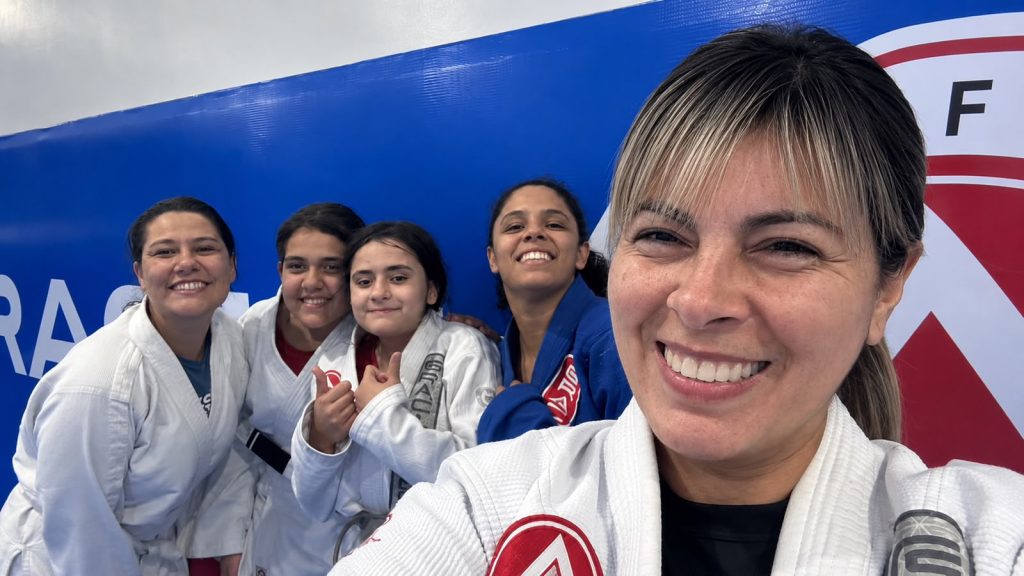
The drive to your first BJJ class is usually worse than the class. You’re picturing a room full of huge guys, wondering if you’ll be crushed, embarrassed, or both, and rehearsing excuses to cancel. We remember that drive. So here’s a walkthrough of exactly what happens from the moment you push the door open, because nerves shrink when you know what’s coming. Walking in: the first ten minutes Someone at the front desk (often the coach) will greet you, hand you a waiver, and show you where to change. Take your shoes off before stepping on the mats, keep your flip flops for everywhere else, and if you got a loaner gi, ask for help tying the belt, since literally nobody ties it right on day one. Introduce yourself to the coach as a first-timer if the booking didn’t already flag it, because good coaches quietly keep an eye on new people all class. Already sorted what you’re wearing? If not, our checklist on what to wear to your first BJJ class covers gi, no-gi and the bag. The warmup, where everyone feels silly at first Class opens with ten or fifteen minutes of jogging, calisthenics and movements you’ve never done before with names like shrimping, bridging and forward rolls. You will not be able to do them properly. Nobody expects you to, and the blue belt next to you also flailed through her first shrimp. Copy the general shape, laugh at yourself a little, and keep moving. Technique and drilling: the heart of the class The coach demonstrates a technique two or three times, then everyone pairs up to practice it with zero resistance, taking turns. This is drilling, and it’s where you’ll spend most of the hour. The coach usually pairs new people with an experienced, patient partner, and it’s completely fine to ask to drill with another woman if that makes your first day easier, or to ask the coach any question at all. Nobody expects the move to work when you do it. They expect you to try it five times in a row slightly less wrong each time. Physical closeness is the honest adjustment. Grappling means someone in your personal space, full stop, and the strangeness of that fades faster than you’d believe, usually within a few classes, because on the mats it stops reading as intimacy and starts reading as technique. If it never fades at a particular gym, that says something about the gym, and we cover the difference in our guide to choosing an academy where women actually train comfortably. Rolling: the part you’ve seen on Instagram Class usually ends with sparring, called rolling. As a first-timer you may be invited to watch, or to roll very lightly with an upper belt whose whole job is keeping you safe. Two rules carry you through: tap early (tap their body or say “tap” the moment anything hurts or feels wrong, no toughness points at stake) and never hold your breath. If you’d rather sit out day one and watch, say so. Any decent coach respects it. Being the only woman in the room Some days you might be. It feels loud at first and it fades. Most training partners will treat you like anyone else learning to shrimp, a few will be awkwardly overcautious until they realize you won’t break, and at a good gym none of it stops you from learning. That said, more and more schools have solid women’s cohorts and women’s classes, so if training with other women matters to you, it’s a fair thing to shop for. Trust your read: after class, a good gym feels like a place you were welcome, and if something felt off, that instinct is data, not oversensitivity. Starting later in life? We wrote about starting BJJ in your 30s and 40s too. After class: the fine print nobody mentions You’ll be sore in muscles you didn’t know existed, mostly your neck, hips and fingers, and it peaks two days later. Wash everything you wore, including the loaner gi before returning it if the gym asks, and shower as soon as you can, because mat hygiene is a shared responsibility from class one. Then book class number two before the soreness talks you out of it. The women who stick around are almost never the most athletic ones, they’re the ones who came back. Frequently asked questions Will I have to spar on my first day? No. Most gyms make rolling optional for beginners, and many keep first-timers out of sparring entirely. If a gym pressures a day-one beginner into hard rounds, that’s a red flag, not a rite of passage. Will I be paired with men? Probably, especially at smaller gyms, and it’s normal in BJJ. Good coaches pair beginners with controlled, experienced partners of any gender. You can always request a female partner if that helps you settle in. How fit do I need to be before starting? You don’t. Class itself builds the conditioning, and every black belt you’ll ever meet started out gassed after one warmup. What if I get my period mid-class? You train, if you want to. A tampon or cup plus dark spats handles it, and you can always step off the mats, no explanation owed. Half the room has dealt with the same thing. How do I know if the gym is right for me? Watch how upper belts treat beginners, whether the coach controls the room, and how you feel walking out. One trial class tells you a lot, and trying two or three gyms before committing is completely normal. The bottom line Your first class is an hour of copying movements badly next to people who were just as lost on their own first day, run by a coach who’s seen a thousand beginners. Show up, tap early, drink water, come back Thursday. That’s the whole assignment, and the woman who walks out of class ten barely remembers the nerves of class one.
Famous Female BJJ Black Belts You Should Know
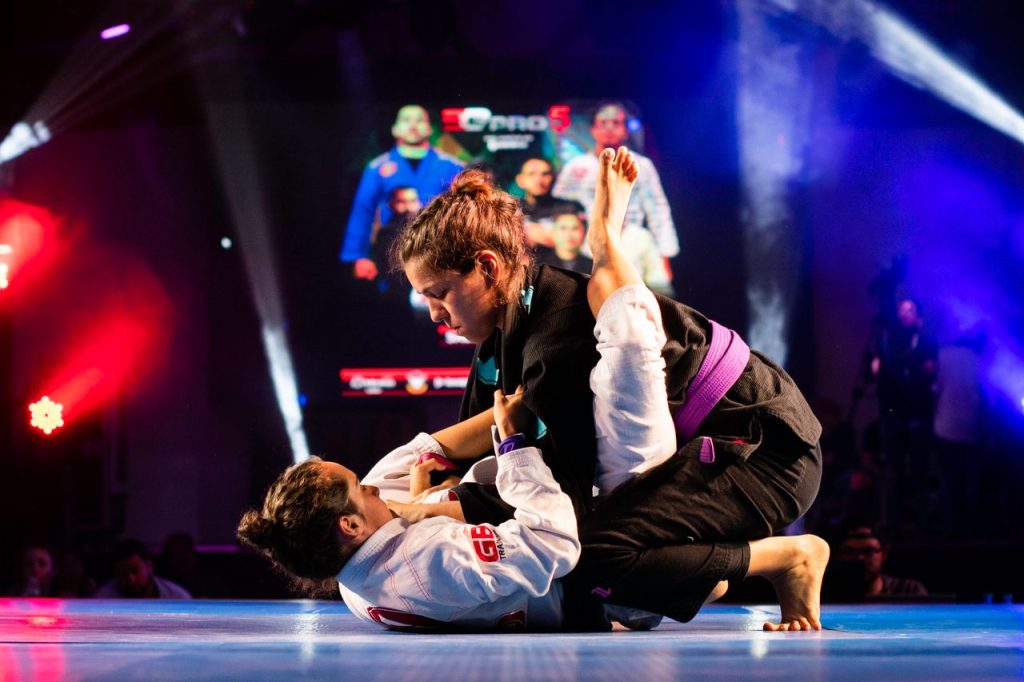
Walk into most BJJ gyms and the posters on the wall are all men. The history books lean the same way, which is strange, because women have been shaping this sport for four decades, winning at the highest level, building teams, and opening doors that stayed shut for generations. This is the list we wish someone had shown us as white belts: the women whose names you should know, and why they matter. One note before we start: any list like this leaves people out. Women’s jiu-jitsu is deeper today than it has ever been, so read this as a starting map, not a complete census. The pioneer who came first Yvone Duarte Every woman wearing a black belt today walks a road Yvone Duarte opened. Widely recognized as the first woman to earn a black belt in Brazilian jiu-jitsu, she competed and taught in a Brazil where women were often not even welcome on the mats, and she spent decades pushing for female divisions and recognition inside the sport’s institutions. When we talk about “growing the women’s side of BJJ,” we’re continuing a project she started when almost nobody thought it was worth doing. The champions who built the golden era Kyra Gracie The first woman of the Gracie family to make competition her career, Kyra won world titles in the gi and ADCC titles without it, and became the face that showed a generation of girls that the family art belonged to them too. Her visibility in Brazil pulled women’s BJJ into the mainstream conversation. Leticia Ribeiro A multiple-time world champion whose influence might be even bigger off the mats. Leticia built one of the most respected women’s competition teams in the sport and her women’s training camps became a rite of passage, places where female grapplers from small academies discovered they weren’t alone. Michelle Nicolini World champion many times over in the gi, ADCC champion without it, and owner of one of the most feared guards the sport has seen at any weight, male or female. Michelle later took her game into MMA, and her seminars remain a masterclass in technique over strength. Gabi Garcia The most dominant force the women’s absolute division has ever known. Gabi stacked world titles and ADCC gold across more than a decade, and love her style or not, her name became shorthand for a level of dominance the sport rarely produces. Beatriz Mesquita Bia came up under Leticia Ribeiro and turned into one of the most decorated competitors of her generation, collecting world titles across belts and weight classes with a pace of medal-winning that few athletes of any era can match. The new wave rewriting the record books Ffion Davies The Welsh submission machine who proved the sport’s center of gravity is no longer only Brazilian or American. Ffion won world titles in the gi and ADCC gold without it, and she’s arguably the biggest star European grappling has produced. Mackenzie Dern A world champion in the gi and ADCC champion who grew up on the mats and carried her grappling into the UFC. For a lot of casual fans, Mackenzie was the first female BJJ name they ever learned, and that crossover visibility matters. Elisabeth Clay The face of the American no-gi generation, known for a leg lock game that veteran black belts openly avoid. Elisabeth represents something new: a woman whose fame comes from the professional no-gi circuit rather than the traditional gi path. The builders working beyond the podium Champions get the headlines, and the sport also runs on women who build. Emily Kwok, a black belt under Marcelo Garcia, became one of the most respected voices in BJJ education and helped write the playbook for how smaller grapplers survive bigger ones. And community organizers like Shama Ko, whose work with Girls in Gis we talked about in our interview with her, create the spaces where the next generation of black belts takes her first class. The pipeline matters as much as the podium. Why these names matter for your own training Representation sounds abstract until you’re the only woman at open mat wondering if you belong there. Knowing this history changes how you stand on the mats. The techniques you drilled this week were refined by these women, the female divisions at your local tournament exist because they demanded them, and the women’s classes at your gym trace back to camps and communities they built. If you’re just starting out, our guide on choosing your first academy helps you find a gym worthy of that lineage. Frequently asked questions Who was the first female BJJ black belt? Yvone Duarte of Brazil is widely recognized as the first woman promoted to black belt in Brazilian jiu-jitsu, a milestone from an era when women were rarely even allowed to compete. How long does it take a woman to get a BJJ black belt? The same as anyone: usually 8 to 12 years of consistent training. There’s no separate standard, which is part of why the belt commands the respect it does. Are there many female black belts today? More every year, though they remain a small fraction of all black belts worldwide. The number has grown fast in the last decade as the first big generation of female competitors matured, and the pipeline behind them is the largest it’s ever been. Keep the history growing Every one of these women started as the new girl in class. If this list does its job, some white belt reading it will be on a version of it twenty years from now. Know the names, tell the stories, and if you’re on the fence about starting, consider this your sign. We tell the stories of women’s jiu-jitsu every week on Instagram at @bjjgirlsmag_usa.
What to Wear to Your First BJJ Class: A Checklist for Women
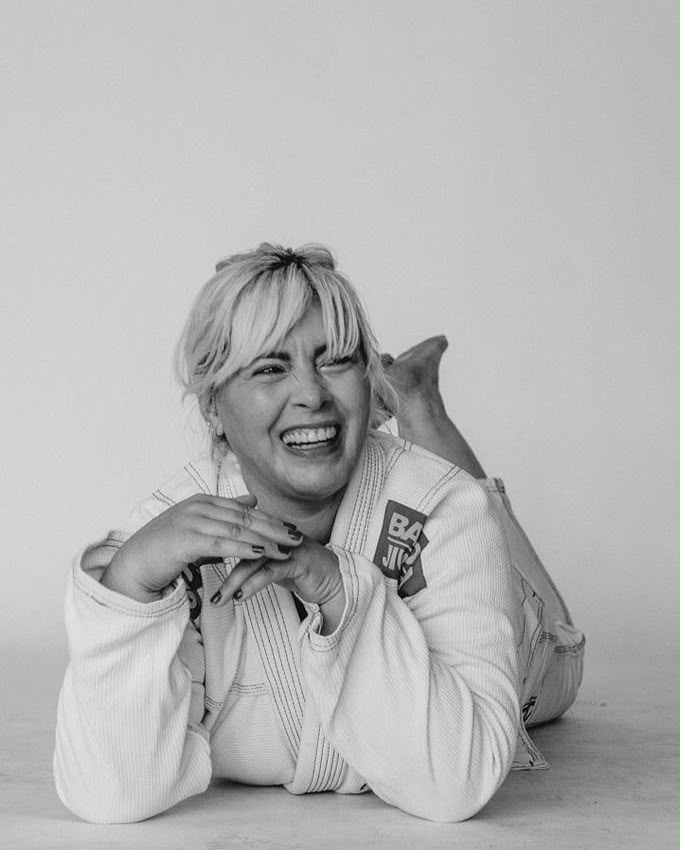
Half the stress of a first BJJ class has nothing to do with the techniques. It’s standing in front of your closet an hour before, wondering if leggings are okay, whether you need to buy a gi before you’ve even tried the sport, and what on earth goes under all of it. We coach beginners every week, so here’s the answer we give every new woman who walks in, exactly as we’d say it to a friend. The short answer Wear fitted athletic clothes you can move in: a fitted t-shirt or rashguard on top, leggings or athletic shorts on the bottom, a no-hardware sports bra underneath, and flip flops for walking off the mats. Don’t buy a gi yet. Almost every gym lends loaner gis for trial classes, so ask when you book. That’s genuinely it, and if you stopped reading here you’d be fine. The longer version depends on whether your first class is gi or no-gi, so check which one you booked and read the matching section. If your first class is a gi class Call or message the gym and ask for a loaner gi, which nearly all schools keep for exactly this. Under the gi, wear a fitted rashguard or a snug athletic shirt plus a compression-style sports bra with no hooks, clasps or zippers, since anything rigid turns into a pressure point the first time someone leans on you. On the bottom, leggings or fitted shorts go under the gi pants and save you awkwardness if the drawstring loosens. If you already know you’ll stick with it and want your own gi from day one, our women’s gi guide and sizing guide cover fit for real female bodies, including curvy cuts. Still, there’s no shame in a loaner for class one. If your first class is no-gi No-gi is simpler: a rashguard or fitted athletic top, plus leggings, grappling spats or athletic shorts. The key word everywhere is fitted. Baggy shirts get tangled in grips and end up strangling you, and loose shorts with pockets catch fingers and toes, which hurts everyone involved. If you train in leggings, thicker is better, because thin fashion leggings go see-through the moment you bridge. Our leggings and spats guide breaks down what survives. What goes in the bag Flip flops or slides, because bare feet touch only the mats, never the bathroom floor Water bottle, bigger than you think you need Hair ties, at least two, plus a spare because one always snaps A small towel Deodorant and a fresh shirt for after If your hair is long, a braid survives grappling far better than a ponytail, and low buns get crushed the first time you’re on your back. Two french braids is the unofficial uniform of women’s BJJ for a reason. What to leave at home All jewelry comes off: rings, earrings, necklaces, bracelets, smartwatches, everything. It scratches partners, snags on the gi, and rings can genuinely injure your own fingers under grip pressure. Trim your nails, fingers and toes, since long nails cut people. Skip perfume and heavy makeup, which end up smeared on other people and their gis. And skip anything with zippers, buttons, hooks or pockets, which covers most streetwear. One honest note about how you’ll feel Whatever you wear, you’ll probably still feel a little exposed the first time, because grappling is closer contact than any sport most of us grew up with. Good fitted gear helps more than you’d expect, and so does knowing that everyone on that mat had a first day too. If you’re still choosing where to train, our guide on choosing your first BJJ academy as a woman is the place to start, because the right gym matters more than the right outfit. Frequently asked questions Can I wear just leggings and a t-shirt to my first class? Yes, as long as the shirt is fitted and the leggings are thick enough to pass a squat test. That combo covers your first weeks of no-gi fine. Do I need to buy a gi before my first class? No. Ask the gym for a loaner when you book. Buy your own once you know you’re staying, and buy a women’s cut when you do, because unisex gis are drawn on male proportions and the fit shows it. What sports bra should I wear for BJJ? A compression pullover with no hooks, clasps or zippers. Support matters less than staying put under pressure. We wrote a full sports bra guide for grappling with the details. Can I train in a regular baggy t-shirt? You can, but you’ll regret it by the second drill. Baggy fabric bunches under grips, rides up, and gets caught between you and your partner constantly. What do I do with my wedding ring? Leave it home or zip it in your bag. Rings under grip pressure can hurt your finger badly, and most gyms won’t let you roll with one anyway. The bottom line Fitted athletic clothes, a no-hardware sports bra, flip flops, hair ties and a water bottle get you through class one with zero gear purchases. Wondering what actually happens once you’re dressed and on the mats? That’s the next article in this series: your first BJJ class, what to expect. For gear guides tested by women who train, follow us on Instagram @bjjgirlsmag_usa.
Best Sports Bras for BJJ and Grappling: What Actually Survives Rolling
Nobody warns you about this one before your first month of jiu-jitsu: the sports bra that carried you through years of running and lifting can fail you in a single round of grappling. Someone passes your guard, your rashguard rides up, a strap slides off mid-scramble, and suddenly you’re defending position with one hand and your dignity with the other. We’ve been there, and so has every woman we train with. A grappling bra has a different job than a gym bra. It has to stay put while a whole adult human applies pressure from angles no treadmill ever will, and it has to do that without hooks or clasps digging into your spine. Here’s what we look for after years on the mats, plus the honest market picture. What rolling does to a sports bra that the gym never will Running bounces you vertically, which is what most sports bras are engineered for. Grappling is different: you’re getting compressed under side control, bridging, inverting, and framing against someone’s bodyweight, so the failure points change completely. The bra that “passes” a spin class can shift, gap, or unclip in one bad scramble. Four things decide whether a bra survives BJJ: No hooks, clasps or zippers. Anything metal or rigid becomes a pressure point under someone’s knee-on-belly, and it can scratch your training partner too. Pullover styles only. Compression over encapsulation. A compressive fit moves with you as one piece. Molded cups with structure tend to shift and gap when you invert. Coverage that holds upside down. High necklines and full side coverage matter more than in any other sport, because you will spend real time inverted or flattened. A racerback or wide straps. Thin straps slide under a rashguard. A racerback locks in place and layers clean under everything. Sweat handling is the quiet fifth factor. Grappling rounds run hot, and a bra that stays soaked against your skin all class is both miserable and a hygiene problem, so look for quick-dry synthetic blends over cotton. The styles that actually work on the mats A medium-to-high support compression pullover is the default answer for most women who grapple. If you want more coverage, longline styles (the ones that extend toward your ribs) double as a crop top under an open gi lapel and keep everything in place when your rashguard inevitably rides up. Larger-chested women usually do best with a high-support compression style one notch snugger than they’d wear for the gym, since bounce isn’t the enemy here, displacement is. The bras with the receipts: what Amazon reviewers keep buying We don’t have a sponsorship in this category, so this list is exactly what it looks like: the pullover, no-hardware styles with the strongest track record on Amazon right now, filtered through the grappling criteria above. Ratings and review counts are what we found in July 2026, so double-check the specific model before you buy, and skip any variant with a front zip or hooks. MIRITY racerback compression bras are the volume champion: 4.4 stars across more than 64,000 ratings, sold in cheap multipacks, zero hardware. Medium support, so bigger busts may want to layer or size carefully, but for building a wash-every-day rotation without spending gi money, this is the pick half the women’s locker room already made. Under Armour Crossback sits at 4.6 stars and is the classic one-notch-up option: fixed pads that don’t migrate in the wash, a crossback that stays planted under a rashguard, and brand-level fabric that holds compression season after season. CRZ YOGA pullovers rate 4.5 stars, and their longline styles are the ones we’d point you to for extra coverage under an open gi lapel. RUNNING GIRL is the budget strappy-back crowd favorite at 4.4 stars and 7,000+ ratings, fine for lighter drilling days, though the thinner straps make it our last pick for hard rolling. SYROKAN high-impact styles carry 4.2 stars over 20,000 ratings and come up constantly among larger-chested athletes. Their catalog mixes pullover and front-closure models, so this is the brand where reading the product photos matters most: pullover only for the mats. Getting the fit right for grappling Buy snugger than you would for the gym, because a bra that feels perfect standing up is usually a half-size too loose once someone’s passing your guard. Test it at home before class: bridge, do a shoulder roll, hang upside down off the couch if you have to. If anything shifts or gaps, it fails. Two or three bras in rotation is the realistic minimum once you’re training more than twice a week, so one can dry while the others work. Care, because staph is real Wash it after every single session, no exceptions, cold water and no fabric softener (it clogs the fibers that make the bra breathe). Hang dry instead of machine drying and the elastic lasts years instead of months. This is mat hygiene as much as gear care. Frequently asked questions Can I wear a regular gym sports bra for BJJ? For your first few classes, yes, as long as it has no hooks, clasps or zippers. Once you’re training regularly you’ll want a compression style that stays put under pressure, because gym bras are built for bounce, and grappling attacks fit from completely different angles. Do I wear a sports bra under my rashguard or gi? Always. Under a rashguard for no-gi, and under a rashguard or fitted top inside the gi. Never just the bra under an open gi jacket. What about bras with removable pads? They work, but the pads migrate in the wash and sometimes mid-roll. Either sew them in place, take them out entirely, or pick a style with fixed light lining. How many sports bras do I need for BJJ? Two if you train twice a week, three or more if you train most days. You’re washing after every session, so the math is really about drying time. Is a front-zip sports bra okay for grappling? We’d skip it. A
Returning to BJJ Postpartum: A Real Recovery Guide
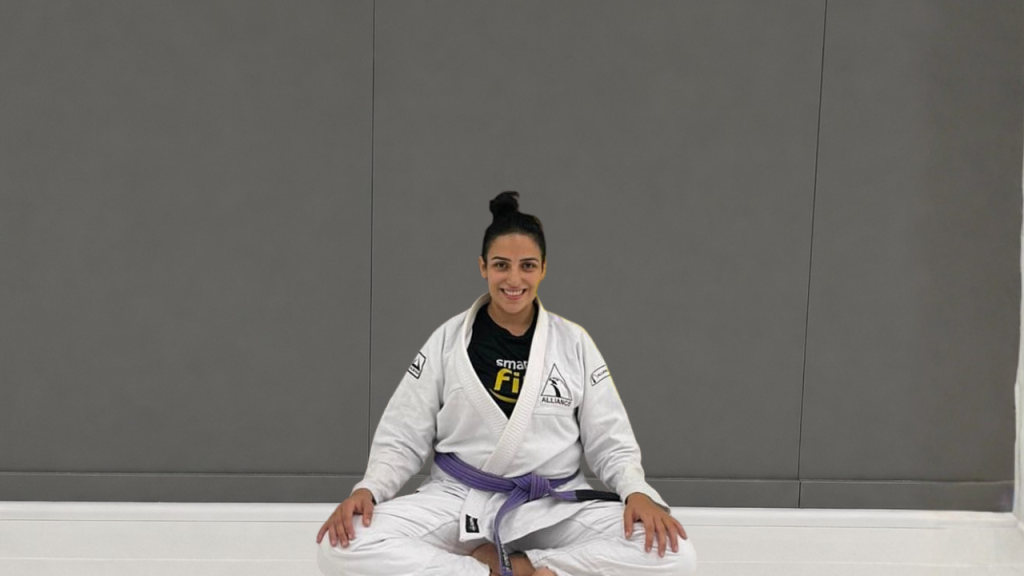
How to return to BJJ postpartum the smart way, from medical clearance and pelvic floor to a realistic timeline back to rolling.