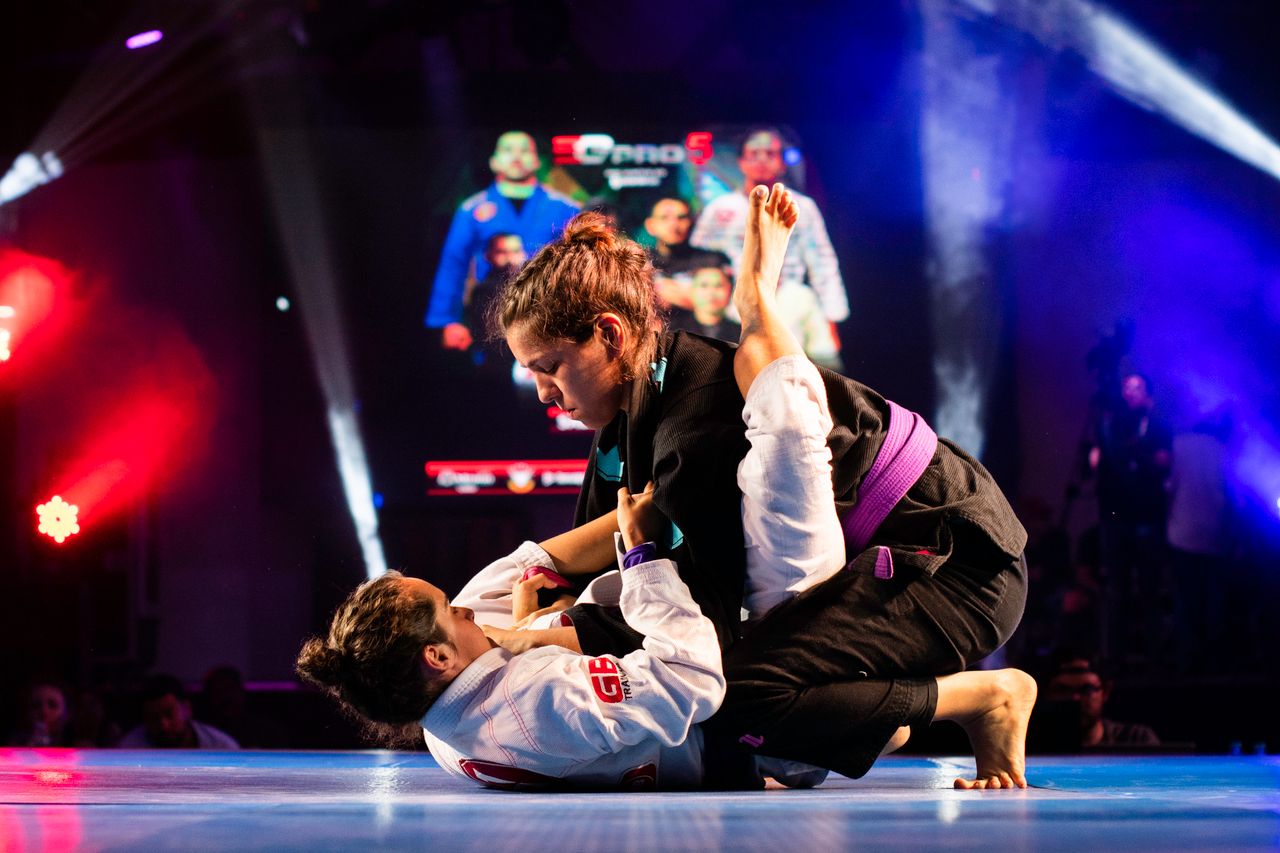
Walk into most BJJ gyms and the posters on the wall are all men. The history books lean the same way, which is strange, because women have been shaping this sport for four decades, winning at the highest level, building teams, and opening doors that stayed shut for generations. This is the list we wish someone had shown us as white belts: the women whose names you should know, and why they matter.
One note before we start: any list like this leaves people out. Women’s jiu-jitsu is deeper today than it has ever been, so read this as a starting map, not a complete census.
The pioneer who came first
Yvone Duarte
Every woman wearing a black belt today walks a road Yvone Duarte opened. Widely recognized as the first woman to earn a black belt in Brazilian jiu-jitsu, she competed and taught in a Brazil where women were often not even welcome on the mats, and she spent decades pushing for female divisions and recognition inside the sport’s institutions. When we talk about “growing the women’s side of BJJ,” we’re continuing a project she started when almost nobody thought it was worth doing.
The champions who built the golden era
Kyra Gracie
The first woman of the Gracie family to make competition her career, Kyra won world titles in the gi and ADCC titles without it, and became the face that showed a generation of girls that the family art belonged to them too. Her visibility in Brazil pulled women’s BJJ into the mainstream conversation.
Leticia Ribeiro
A multiple-time world champion whose influence might be even bigger off the mats. Leticia built one of the most respected women’s competition teams in the sport and her women’s training camps became a rite of passage, places where female grapplers from small academies discovered they weren’t alone.
Michelle Nicolini
World champion many times over in the gi, ADCC champion without it, and owner of one of the most feared guards the sport has seen at any weight, male or female. Michelle later took her game into MMA, and her seminars remain a masterclass in technique over strength.
Gabi Garcia
The most dominant force the women’s absolute division has ever known. Gabi stacked world titles and ADCC gold across more than a decade, and love her style or not, her name became shorthand for a level of dominance the sport rarely produces.
Beatriz Mesquita
Bia came up under Leticia Ribeiro and turned into one of the most decorated competitors of her generation, collecting world titles across belts and weight classes with a pace of medal-winning that few athletes of any era can match.
The new wave rewriting the record books
Ffion Davies
The Welsh submission machine who proved the sport’s center of gravity is no longer only Brazilian or American. Ffion won world titles in the gi and ADCC gold without it, and she’s arguably the biggest star European grappling has produced.
Mackenzie Dern
A world champion in the gi and ADCC champion who grew up on the mats and carried her grappling into the UFC. For a lot of casual fans, Mackenzie was the first female BJJ name they ever learned, and that crossover visibility matters.
Elisabeth Clay
The face of the American no-gi generation, known for a leg lock game that veteran black belts openly avoid. Elisabeth represents something new: a woman whose fame comes from the professional no-gi circuit rather than the traditional gi path.
The builders working beyond the podium
Champions get the headlines, and the sport also runs on women who build. Emily Kwok, a black belt under Marcelo Garcia, became one of the most respected voices in BJJ education and helped write the playbook for how smaller grapplers survive bigger ones. And community organizers like Shama Ko, whose work with Girls in Gis we talked about in our interview with her, create the spaces where the next generation of black belts takes her first class. The pipeline matters as much as the podium.
Why these names matter for your own training
Representation sounds abstract until you’re the only woman at open mat wondering if you belong there. Knowing this history changes how you stand on the mats. The techniques you drilled this week were refined by these women, the female divisions at your local tournament exist because they demanded them, and the women’s classes at your gym trace back to camps and communities they built. If you’re just starting out, our guide on choosing your first academy helps you find a gym worthy of that lineage.
Frequently asked questions
Who was the first female BJJ black belt?
Yvone Duarte of Brazil is widely recognized as the first woman promoted to black belt in Brazilian jiu-jitsu, a milestone from an era when women were rarely even allowed to compete.
How long does it take a woman to get a BJJ black belt?
The same as anyone: usually 8 to 12 years of consistent training. There’s no separate standard, which is part of why the belt commands the respect it does.
Are there many female black belts today?
More every year, though they remain a small fraction of all black belts worldwide. The number has grown fast in the last decade as the first big generation of female competitors matured, and the pipeline behind them is the largest it’s ever been.
Keep the history growing
Every one of these women started as the new girl in class. If this list does its job, some white belt reading it will be on a version of it twenty years from now. Know the names, tell the stories, and if you’re on the fence about starting, consider this your sign.
We tell the stories of women’s jiu-jitsu every week on Instagram at @bjjgirlsmag_usa.