Leandro Vieira Named in Public Civil Lawsuit in California Involving Checkmat
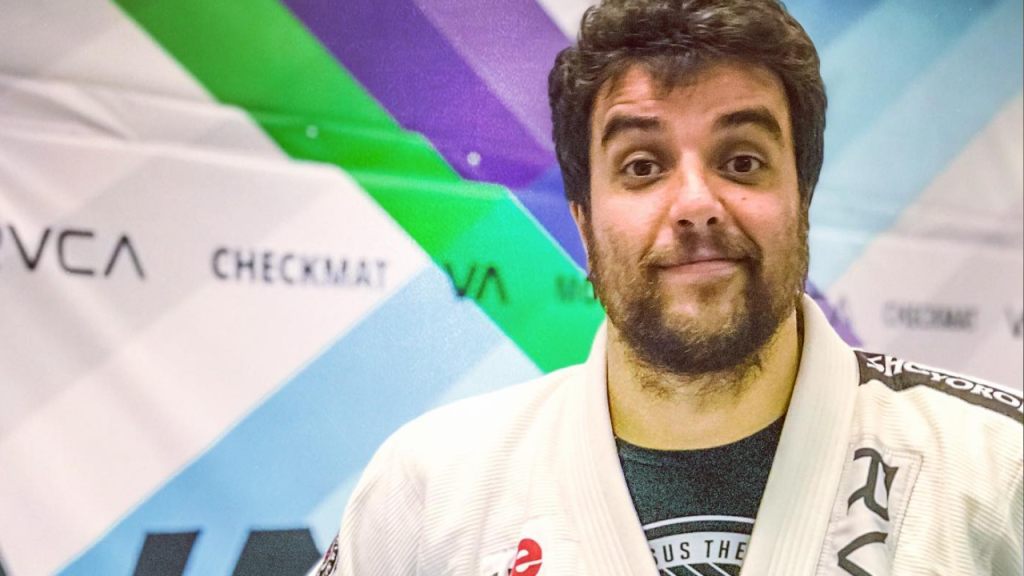
In recent days, the international jiu-jitsu community has begun to more openly address public statements made by women regarding experiences of misconduct within the sport. This renewed discussion gained momentum after athlete Alexa Herse shared a series of posts on her personal social media describing what she characterized as inappropriate behavior during training involving Andre Galvão. Alexa’s statements, published openly and attributed solely to her, were widely circulated and prompted broader conversations within the community. Following these posts, other women began speaking publicly about their own experiences, many of which had remained undisclosed for years. It is within this broader context that the name Leandro Alcantara Vieira appears in a publicly accessible civil lawsuit filed in Santa Clara County, California, which also names organizations associated with the Checkmat team. This article is intended to provide factual, public-record information only, based on statements made by the individuals involved and documents available through official court records. It does not offer conclusions or judgments. Context surrounding the public discussion After Alexa’s posts were made public, conversations intensified around issues such as power dynamics in high-level training environments, the culture of silence in competitive sports, and institutional responsibility. As these discussions unfolded, additional women came forward with personal accounts, each distinct in circumstance and timing. One such case involves Julia Trevino, whose allegations are detailed in a civil lawsuit that has been publicly available prior to the recent attention and is now receiving increased visibility. The inclusion of these developments together is purely chronological and contextual, and does not imply causation or collective responsibility. Julia Trevino’s public statements In posts shared on her personal profile, Julie Trevino explains that she chose to speak publicly after many years of remaining silent. According to her account, the events she describes occurred when she was still a minor and involved a relationship of trust with a figure of authority in jiu-jitsu. In her public statements, she says that: Julie Trevino also states that she filed a report with local law enforcement. These statements are available directly from her own public accounts, where she serves as the primary source of the information. What the public civil lawsuit states In addition to her personal statements, a civil lawsuit filed in Santa Clara County, California, is available for public review through the UniCourt database: 👉 LEARN MORE According to the court filing, Julia Trevino is the plaintiff and alleges that she was subjected to sexual abuse during her childhood by an instructor who, at the time, held positions as a coach, mentor, and advisor. The lawsuit also names entities associated with the jiu-jitsu community, including Checkmat, alleging that these organizations had supervisory authority over the instructor in question. Among the claims outlined in the filing, the plaintiff alleges that the organizations: The case is a civil matter and, based on publicly available records, no final judgment has been issued at this time. Allegations versus judicial findings It is important to note that: This article reports only what is stated in public documents and public statements, without interpretation or inference. Why this is so important to the jiu-jitsu community Situations like this have brought renewed attention to long-standing concerns within competitive sports, including: Providing access to public records allows the community to review original sources and engage with the information directly. Public sources referenced Public Statements It is important to note that Leandro Vieira published a statement on his Instagram regarding the matter, as did Checkmat. Checkmat Statement “Checkmat is governed by a collective leadership structure, and matters of this nature are addressed through established internal processes. The leadership board reconvened to review an issue that had previously been brought before the organization involving a former member of the leadership board. When the allegations were first raised, the board removed the individual from any leadership role, allowing only limited affiliation while an ongoing civil proceeding awaited resolution, which remains unresolved. As part of the board’s ongoing responsibility to reassess unresolved matters that affect organizational standards, the leadership board voted to suspend the individual from all Checkmat affiliation until the civil action is resolved. This is an administrative governance decision made to uphold organizational standards and responsibilities. It is not a finding of fact and not a response to public commentary. Checkmat remains committed to maintaining a safe, professional, and respectful training environment across all affiliated academies. No further public comment will be made while the matter is pending.” Leandro Vieira Statement “To our community, We want to address this matter openly and directly. A recent allegation involving Coach Leandro was posted on social media by a former student and assistant coach who has not been part of our community for several years. While this allegation does not accurately represent the facts, we take any concerns raised about our academy very seriously. We want to clarify that this is not a criminal accusation. The matter is civil in nature and, due to its legal status, is now in the hands of the justice system. Coach Leandro has over 20 years of experience as a Brazilian Jiu-Jitsu black belt, teaching students of all ages around the world. Throughout those years, he has never had any allegation of misconduct. Those who train here know the values we live by every day: respect, discipline, and care for one another. Our commitment remains unchanged: to provide a safe, positive, and respectful environment for every student and family. We thank everyone for their understanding, trust, and continued support during this time.” Final note This article is informational in nature only.It does not constitute an investigation, accusation, or legal conclusion. BJJGirlsMag emphasizes the importance of due process, responsible reporting, and thoughtful engagement with sensitive issues affecting the sport.
The Blue Belt Burnout: Why So Many Quit BJJ at This Stage
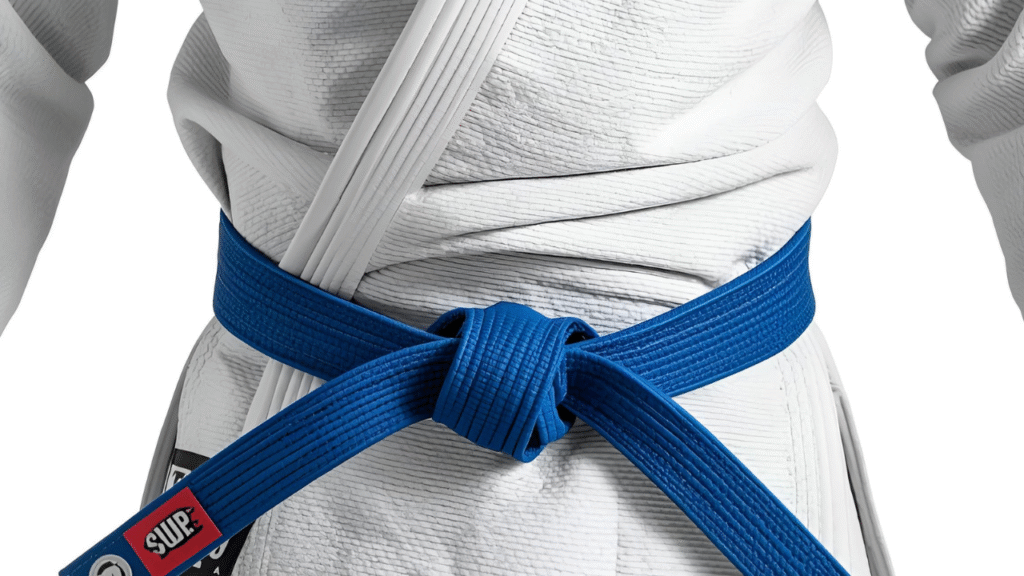
If you train Brazilian jiu-jitsu, you’ve almost certainly heard about the blue belt dropout. For some people it’s a running joke, and for plenty of others it’s the exact moment they quietly stopped showing up. So why do so many promising practitioners hang up the gi right after hitting this milestone? Here’s what’s really going on once the high of earning your blue belt starts to fade, and how to train through it instead of walking away. From Motivation to Frustration The white belt phase runs on novelty. Everything’s new, you’re improving fast, and you might even catch a higher belt off guard now and then, so the blue belt lands as a well-earned reward. Then it gets tied around your waist and the whole dynamic shifts. Training partners come at you harder, people stop treating you as the newbie who gets guidance and start expecting you to lead, and the novelty that carried you wears off while the grind sets in. If nobody warned you it was coming, that shift can feel demoralizing. 5 Real Reasons People Quit at Blue Belt 1. The Motivation Drop We chase goals hard, then hit them and feel this strange flatness show up. The blue belt can read like a finish line, which is exactly the trap, because it’s really where the actual journey starts. 2. Increased Pressure You’re not a beginner anymore, so your professor and teammates start expecting more, and the mistakes that got a shrug at white belt suddenly draw correction. For a lot of people that weight quietly turns into self-doubt. 3. Injuries and Recovery Rolling harder means the body takes more, and the steady grind of tweaked knees, jammed fingers and cranky shoulders wears on your head as much as your joints. This one alone ends more blue belt runs than anything else on the list. 4. The Long Road to Purple Going from white to blue felt quick. Purple is a different animal, often years out, and when you’re tired or unmotivated that gap can feel like it stretches on forever. 5. The Identity Crisis A blue belt is as much mindset as technique. You’re suddenly expected to give white belts a real challenge and hang with the purple belts, and on the days that doesn’t happen, the doubt creeps in fast. Real Stories, Real Struggles Tiago, now a purple belt, once felt his whole game come apart, injured and discouraged and half-sure it wasn’t worth it, and he stayed anyway and leveled up. May, another BJJ Girls Mag contributor, calls earning her blue belt a dream she chased after a long break, training hard and making peace with the ups and the downs. How to Survive Your Blue Belt Crisis Final Roll: This Is Where Black Belts Are Made The blue belt crisis is real, and it’s more of a test than a verdict. Roll through it and you come out the other side tougher in the head as much as in the body. Don’t quit, not yet. Your journey is barely getting started. Read Also
Starting BJJ in Your 30s or 40s: What to Expect as a Woman
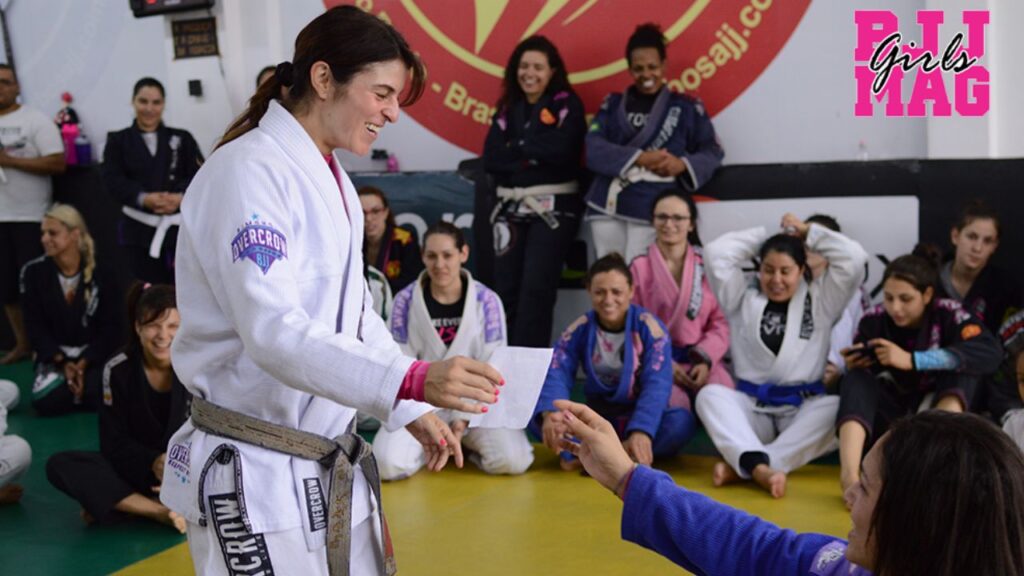
If you’re in your 30s or 40s and circling the idea of Brazilian jiu-jitsu, let me put one worry to rest right away, you’re in good company and you’re right on time. Honestly, this stage of life can be one of the best moments to start. It’s still completely normal to feel a knot in your stomach about stepping onto the mats, especially in a sport that gets painted as intense, male-dominated, and physically brutal. This guide walks you through what to actually expect, and how to move through those first weeks with confidence and a little self-kindness. You’re Right on Time Let’s get this out of the way, you are not too old to start jiu-jitsu, nowhere close. Plenty of women begin in their 30s, 40s, and well beyond, and they flourish. Where a lot of sports quietly close the door on age, jiu-jitsu leans on technique, patience, and consistency far more than youth or raw strength. Whatever you feel short on early, flexibility or cardio, you tend to make up for with focus, discipline, and the kind of emotional steadiness that only shows up with age. Those are exactly the traits that hand adult beginners an edge a lot of teenagers never had. Yes, the Fear of Getting Hurt Is Normal One of the most common worries for women starting later is getting injured, especially rolling with men. Maybe you’re picturing a stronger partner cranking something too hard, or feeling out of place, or just not being able to keep up. Those feelings are fair, and here’s the reassuring part: a well-run academy puts safety first, beginners most of all. Classes usually open with controlled drills and build up slowly, so you won’t get thrown into hard sparring on day one, or even in your first month. The academy you pick makes all the difference, though. Look for a real beginner program, instructors who respect boundaries, and a room that values safety over ego. If you want help vetting one, we wrote a full guide on how to choose your first BJJ academy. Women-Only Classes Can Change the Game If training with men makes you nervous, you’re far from the only one, and that hesitation is completely normal at the start. Women-only classes are built for exactly this. They give you room to learn at your own pace, roll with other women, ask questions without feeling watched, and feel safe in your body and your head. A lot of women treat these sessions as a launch pad. They build confidence in the women’s class, then slide into the co-ed ones once it feels right, and more often than not they find it was never as scary as they’d built it up to be. It really comes down to picking good training partners and speaking up when you need to. Pick Your Training Partners on Purpose Once you start joining the mixed classes, who you roll with matters just as much as where you train. As a beginner in your 30s or 40s, you’re there to learn, not to prove a thing to anybody. So don’t be shy about turning down a round with someone who feels reckless or too amped up. Ask the instructor to pair you, and gravitate toward partners who are controlled, technical, and generous, because the good ones help you grow without ever running you past your limits. Jiu-Jitsu Actually Fits Family Life If you’re a mom, you’re probably wondering how training squares with everything else you carry. What a lot of women find is that jiu-jitsu slots into family life better than almost any other hobby. It’s common for moms to drop their kids at the children’s class, stay for the adult class right after, and turn the whole thing into a shared family routine. Training side by side builds bonds, gives you common goals, and quietly models healthy habits, which lands especially hard for daughters watching their mother learn to defend herself. In a lot of gyms the community ends up becoming an extension of your own support system. Expect to Move Slower, and Let That Be Fine Your body at 35 or 45 won’t move the way it did at 18, and that’s genuinely okay. You might need a longer warm-up, recover a little slower, sit out a round here and there. None of that is weakness, it’s you training with your head. The trick is to listen to your body, pace yourself, and play the long game instead of chasing intensity. Consistency is what carries you forward in this sport, and plenty of women find that jiu-jitsu sharpens their mobility, builds real strength and endurance, melts off stress, and reconnects them with a body they’d stopped listening to. Your Journey, Your Pace One of the quietly beautiful things about starting later is that you’re doing it for yourself, full stop, not for approval or a podium or anyone else’s opinion. You tend to compare yourself less, savor the small wins more, and train for your health instead of your ego. And without even trying, you’re setting an example, for your kids, your friends, the women watching from the sidelines wondering if they’ve missed their window. You’re the proof that they haven’t. You Belong Here Starting jiu-jitsu in your 30s or 40s is a powerful thing to do, and you bring life experience, emotional maturity, and a solid sense of who you are onto the mats. With the right academy, the right people around you, and the right mindset, you’ll find this journey is as much about growing as a person as it is about learning to grapple. Whether you came for fitness, self-defense, your mental health, or just the fun of it, you belong here.
How to Choose Your First BJJ Academy (As a Woman)
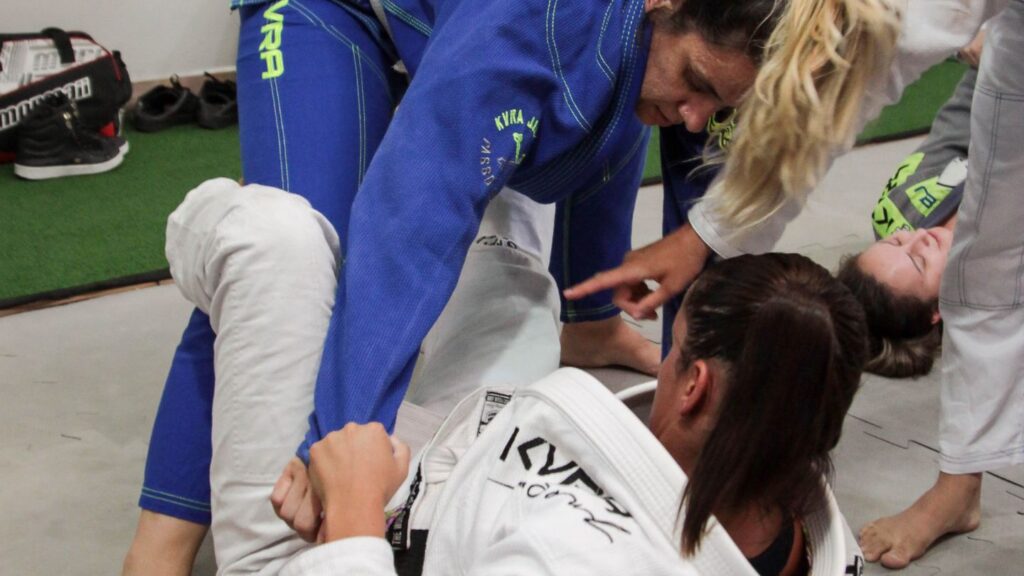
Starting Brazilian jiu-jitsu can be one of the most empowering decisions you’ll make, and where you start matters almost as much as the decision itself. Gyms are not interchangeable, and walking in as a woman in a mostly male space adds a few extra things worth paying attention to before you commit. This guide is for women looking for a healthy, respectful place to begin. Whether you’ve never touched a martial art or you’re coming back after years away, here’s what’s worth weighing before you pick your first academy. Look for Female Leadership and Representation One of the highest-impact things you can do is choose a gym where women are visible, and not only on the beginner mats. Look for them coaching, running classes, and holding rank. When an academy has black belt women on its staff, it usually says something about the culture underneath, a place that invests in women rather than just tolerating them. You might not end up training directly under a woman, and even so, having female role models in the room changes how supported you feel from day one. It’s also worth asking about women-only classes. Early on, when the close-contact side of jiu-jitsu feels like a lot, those sessions give you a softer place to learn, and they tend to be where the first real friendships on the mat get made. The Culture Tells You More Than the Class List Every gym has its own feel, and that feel will keep you training or quietly push you out the door long before technique ever does. Before you sign anything, do a little homework on how the place treats its members, women especially. Start by asking a few direct questions: Does the gym have a written code of conduct? Is there a clear policy on harassment or misconduct? Are students actually encouraged to report uncomfortable situations? Search the gym’s name online and see if anything troubling comes up, past incidents, complaints, safety issues. If you can, talk to women who already train there, because ten minutes with them will tell you more than any website. Stories of harassment and manipulation in martial arts are more common than anyone likes to admit, and you have every right to train somewhere you feel safe and respected. Ask for a Real Trial Period, and Actually Use It A lot of gyms hand out a free class or a free week, and that’s rarely enough time to read a room. If you can, ask for something longer, two or three months, before you lock into a contract. Those early weeks are when the real picture shows up, and you start to notice things like: How instructors interact with different students Whether women are treated equally and with respect If boundaries hold up during drills and sparring Whether you feel safe speaking up or asking a question A place can look flawless on social media and feel like a different planet once you’re training there three times a week. The trial is how you form your own read, with nobody rushing you into a decision. The Students Set the Atmosphere Instructors set the tone, and the students are the ones you’ll actually spend your hours with, so the community carries just as much weight. A healthy academy is full of people who pull each other up, whatever their rank, gender, or reason for showing up. While you’re visiting or on your trial, notice: Do the higher belts help beginners, or ignore them? Are people respectful during sparring, or do they use it to prove a point? Is there a real mix of ages, backgrounds, and goals? Then be honest about what you came for. Training to compete, to get fit, and to build confidence all point to different gyms, and a hard-charging competition room can be exactly the wrong fit for someone who wants a steady, low-pressure start. Make sure the place fits the goal you actually walked in with. Trust Your Gut, Especially as a Woman If something feels off and you can’t fully explain why, trust it anyway. That gut read is you looking out for yourself, and it has earned the benefit of the doubt. A few red flags worth naming: Instructors making overly personal comments Students being pushy about sparring or rolling Rules that shift depending on who’s on the mat Anything that leaves you feeling objectified or disrespected You deserve a space that feels safe and professional. If you keep walking out of class anxious or second-guessing yourself, that gym has already handed you your answer. If You’re Bringing Kids or Family For a lot of women, jiu-jitsu turns into more than a martial art. It becomes a routine, a new circle of friends, sometimes the place the whole family ends up training together. If you’re a mom, or you plan to bring your kids along, the academy has to feel trustworthy enough that you’d happily leave your child in a kids’ class down the hall. It doesn’t need to be soft, just genuinely safe, and the good ones manage both without thinking twice about it. You Belong on the Mats Choosing your first academy is really about choosing the environment that shapes your whole start in the sport, so give it the time it deserves. Do the research, ask the awkward questions, and watch how people behave when they think nobody’s evaluating them. You deserve to train somewhere you feel seen and respected. The best gym for you is the one that meets you where you are and helps you grow into the strongest version of yourself, and that’s rarely the same one with the most medals or the slickest Instagram. Take your time, trust yourself, and remember that you belong on the mats.
What Every Woman Should Know Before Starting Brazilian Jiu-Jitsu
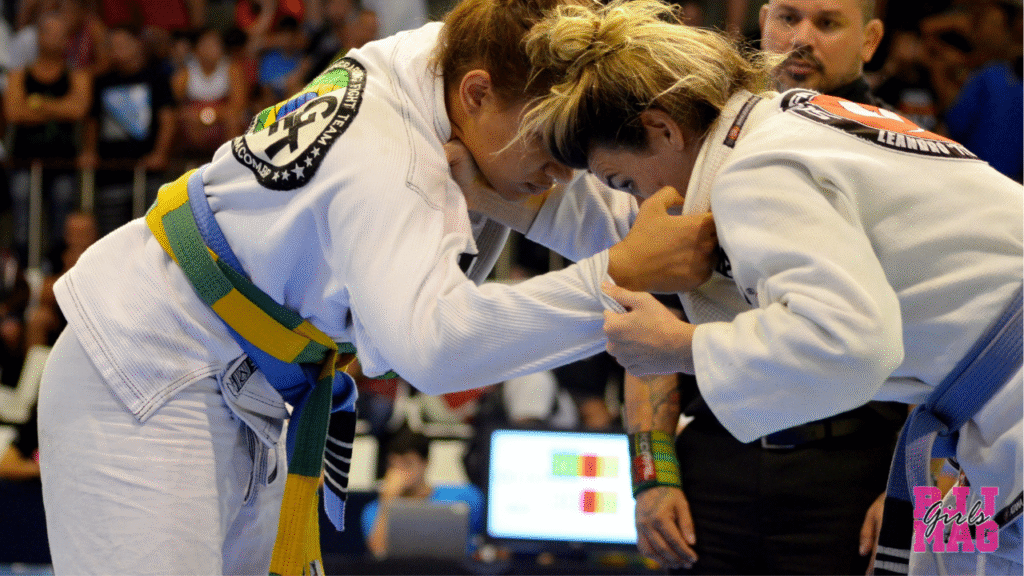
If you’re reading this, you’ve probably been circling the idea of Brazilian jiu-jitsu for a while, half curious and half unsure. Maybe a few videos came across your feed, or a gym near you started running women’s classes and you keep meaning to check it out. That mix of curiosity and hesitation is where most women start, so you’re in good company. What follows are the things women ask about most before their first class, the stuff that actually settles the nerves. Whether you’re 18 or 48, this is what’s worth knowing before you step on the mats. 1. You Don’t Need to Be in Shape to Start The thing that keeps most women out is the idea that they have to get in shape first, when the training itself is what gets you there. BJJ classes are built around beginners, so you build strength, endurance and flexibility as you go, with instructors who are used to students at every fitness level. Take breaks when you need them and move at your own pace, because what actually moves the needle is showing up consistently, not grinding yourself into the ground on day one. 2. It’s Normal to Sometimes Be the Only Woman in Class Depending on where you live, BJJ can still lean heavily male, and that’s no reason to count yourself out. Plenty of women start as the only female in the room, and while that feels intimidating at first, most solid gyms work to keep the space respectful and welcoming, and more women tend to trickle in as the community grows. If training around other women matters to you, look for schools with women’s classes or female instructors, and you’ll feel the difference walking in. 3. You’re Going to Feel Awkward at First, and It Passes Jiu-jitsu is close-contact by design. You’ll sweat, roll around, and spend a lot of time tangled up with training partners, which can feel like a lot early on if you’re not used to being that physical with people you just met. Give yourself a few weeks. The awkwardness fades faster than you’d expect once your focus shifts to learning the techniques, and one day it just registers as part of training. 4. Gear Matters, But You Don’t Need Everything on Day One For your first few classes, most academies will lend you a gi, and if they don’t, fitted workout clothes that won’t rip or ride up will do the job. Once you know you’re sticking with it, you’ll want your own kit: A properly fitted women’s gi (brands like Tatami, Fuji, or Gold BJJ are a safe start) A rash guard, especially for no-gi classes A supportive sports bra with compression shorts or leggings A mouthguard, which earns its place once you start sparring Skip the loose t-shirts, jewelry, and makeup on the mat, keep your nails short, and bring flip-flops for walking around off the tatame. 5. You Don’t Have to Spar Right Away A lot of beginners lose sleep over rolling, which is the sparring part, picturing themselves thrown into it on day one. In most academies new students aren’t expected to spar until they’ve got the basic movements down. If your gym does nudge you toward it early, it’s completely fine to sit one out or ask to watch, because you’re in charge of your own training and a good instructor will never push you past what you’re ready for. When you do start, tapping is simply how you learn and stay safe, so there’s nothing to prove by holding out. 6. Progress Feels Slow, and That’s the Normal Part Jiu-jitsu takes its time. It can take ten years or more to reach black belt, and promotions ride on consistency, skill and mindset rather than how often you clock in. There will be stretches where it feels like nothing is clicking, and that’s exactly when a lot of people walk away. Stay in it. Even training twice a week, you start stacking small wins, escaping a bad position, remembering a move under pressure, lasting a little longer in a round. It rarely feels linear, and it’s happening even on the days it doesn’t. 7. You’re Stronger Than You Think Most women who start jiu-jitsu end up meeting a version of themselves they didn’t know was in there. Learning to defend yourself, control your body and work through fear builds a kind of confidence that’s hard to find anywhere else, and it doesn’t stay on the mat. That steadiness follows you into how you speak up, how you focus, and how you handle pressure everywhere else. 8. Find the Right Gym for You Not every academy is going to fit, and figuring that out early is progress in itself. Look for a school that welcomes beginners, keeps a respectful and supportive culture, has women on the mats or in leadership, and treats learning as the point rather than winning. Use the free trial classes, and trust your gut, because if a place leaves you feeling uncomfortable or disrespected, the right one is still out there and worth the search. From One Woman to Another Starting jiu-jitsu as a woman can feel intimidating, and it’s still one of the most empowering things you can do for your body and your head. The hardest rep is walking through the door the first time, and everything gets easier after that. Give yourself permission to be a beginner, you don’t have to be fast or strong or fearless, you just have to show up. You belong on the mats.
Training BJJ During Your Period: What You Need to Know
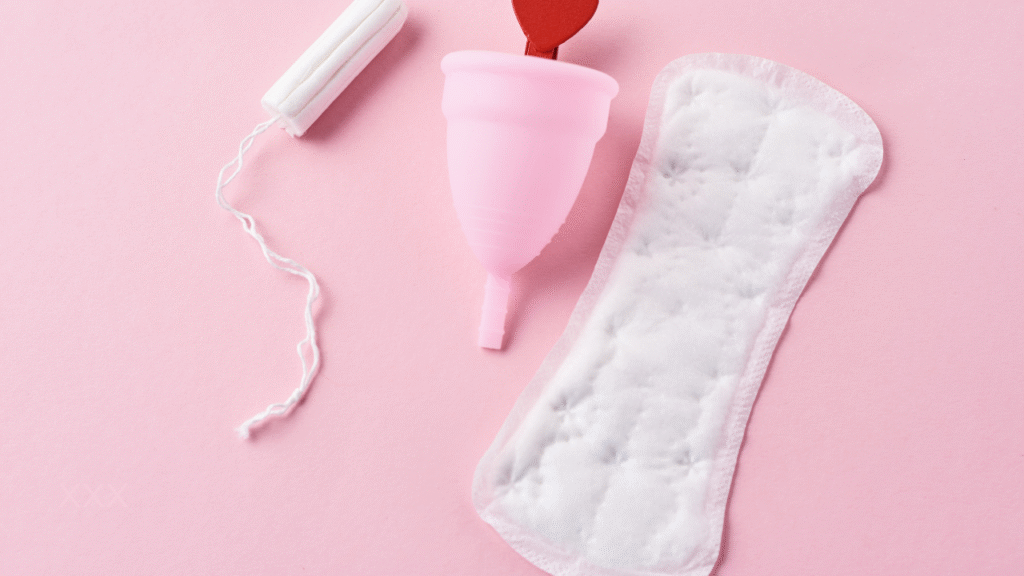
If you train Brazilian jiu-jitsu, you’ve almost certainly hit this question at some point: should I train while I’m on my period? It’s a common worry, especially early on. The cramps, the mood swings, the fear of a leak in front of everyone, all of it can make skipping class feel like the easier call. Here’s the thing though, plenty of women train straight through their cycle and come out feeling better for it. This one’s for anyone who’s unsure, uncomfortable, or just curious about how to stay consistent on the mats through their period. Let’s get into what actually matters. Understanding Your Body Start here: your period is a natural process that touches nearly half the planet, and it says nothing about how capable you are. What actually makes the difference is how you respond to it and how you look after your body through each phase of the cycle. There’s no single right answer about training on your period. Some women feel strong and lit up, others feel drained, bloated, or emotionally raw, and both are completely normal. Listening to your body is the whole game. You never have to grind through real pain, and you also don’t have to write yourself off just because you’re bleeding. Can You Train on Your Period? Yes, you absolutely can. Unless your doctor has said otherwise, there’s no medical reason to skip jiu-jitsu just because your period showed up. A lot of women actually feel better after training, because moving your body eases cramps, lifts your mood, and takes the edge off bloating, while the blood flow and the endorphins push back against the hormonal dip that drags you down. That doesn’t mean you have to redline it. Skip the sparring and drill instead, or work positional rounds, or just show up, stretch, and stay in the loop with your training partners. Staying consistent was never about going hard every single day. What to Wear, and What to Skip The right gear changes how confident you feel more than almost anything else. Reach for dark spats or leggings under a long rash guard or your gi, because dark colors take the worry out of a leak and the tighter fit keeps whatever you’re using in place. A few options women rely on: Tampons, discreet and great for full range of motion, as long as you change them on schedule Menstrual cups, eco-friendly and genuinely leak-resistant once you’ve got the placement down, which is why so many athletes swear by them Period underwear, a newer option you can wear on its own or layer under something else for backup Pads, not ideal for hard training since they shift around, though they hold up fine for light drilling Go with whatever makes you feel most secure, because the point is to spend class thinking about your training instead of your body. Talking to Your Coach or Teammates You don’t owe anyone an explanation about your period, and you can share it if that makes your day easier. Some women give their coach a heads-up, especially if they want to sit out sparring or dial the session back. Others just quietly avoid a position or a partner and say nothing at all, which is completely fine. You have every right to protect your physical and emotional space, so if a position feels wrong or you’re just not up for getting flattened under 90 kilos of pressure, speak up or tap early. That counts as taking care of yourself. What About Pain and Fatigue? Let’s be honest, some periods are brutal. If you’re wrecked by cramps, headaches, nausea, or bone-deep fatigue, taking the day off is a perfectly good decision, and rest does real work for you. But if your symptoms are manageable and you still want the mat, adjust instead of bailing. Go light, live in technique, or use the hour to watch and learn. Training through your cycle can actually turn you into a more intuitive athlete, because you start noticing exactly how your body moves, reacts, and bounces back. Emotional Shifts and Mental Health A lot of women ride mood swings or anxiety during their cycle, and jiu-jitsu can be a real release valve in those weeks. The mat is one of the few places you can empty your head, drop back into your body, and send the tension somewhere useful. And if you’re not at your best, go easy on yourself, because you don’t owe anyone a flawless performance, least of all during a week when so much is happening under the surface. Being kind to yourself is its own kind of discipline. Training Is a Choice, Never an Obligation The biggest takeaway is simple: you don’t have to stop training because of your period, and you don’t have to force yourself onto the mat either. It’s your body and your call. Some days you’ll shock yourself with how strong and dialed-in you feel despite the cramps. Other days you’ll want nothing but your couch and a heating pad, and that’s just as valid. Learning to train through your cycle is a slow process of trial, error, and acceptance, and nobody else gets to tell you what’s right. Hopefully this gives you the nerve to find your own rhythm. One Last Tip Keep a little period kit in your gym bag, a clean pair of leggings, your go-to products, maybe a couple of pain relievers. Trust me, it’ll save your day more than once. Training while you’re menstruating doesn’t make you any less of a grappler, and if anything it shows how tough and adaptable you already are. Honor your body, respect your limits, and do what feels right for you. And if anyone ever acts like jiu-jitsu and periods don’t mix, the answer is easy, they do, because women don’t stop being women the second they step on the mat. We bring all of ourselves out there, cycles included.