
Your First BJJ Class as a Woman: What to Expect
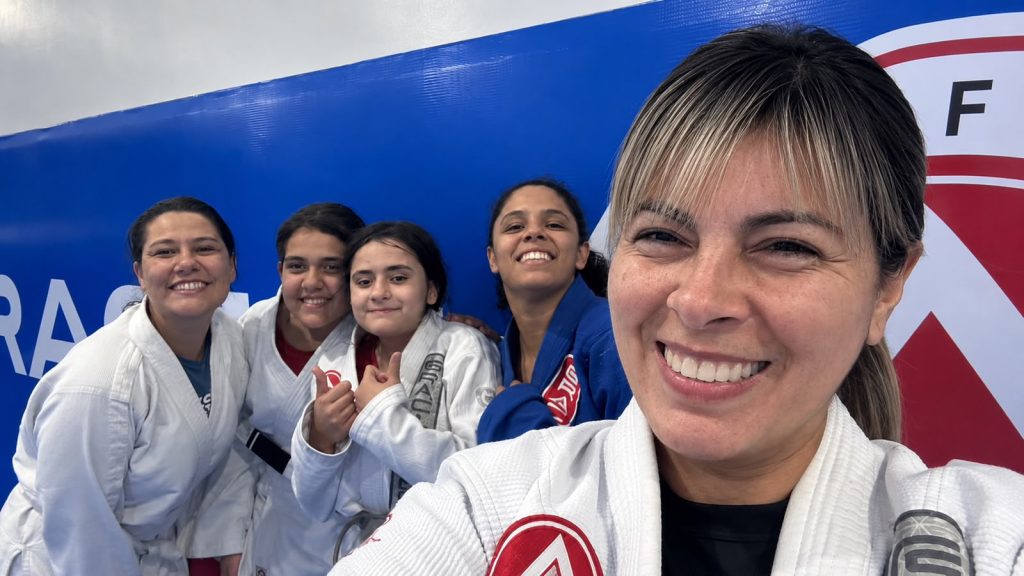
The drive to your first BJJ class is usually worse than the class. You’re picturing a room full of huge guys, wondering if you’ll be crushed, embarrassed, or both, and rehearsing excuses to cancel. We remember that drive. So here’s a walkthrough of exactly what happens from the moment you push the door open, because nerves shrink when you know what’s coming. Walking in: the first ten minutes Someone at the front desk (often the coach) will greet you, hand you a waiver, and show you where to change. Take your shoes off before stepping on the mats, keep your flip flops for everywhere else, and if you got a loaner gi, ask for help tying the belt, since literally nobody ties it right on day one. Introduce yourself to the coach as a first-timer if the booking didn’t already flag it, because good coaches quietly keep an eye on new people all class. Already sorted what you’re wearing? If not, our checklist on what to wear to your first BJJ class covers gi, no-gi and the bag. The warmup, where everyone feels silly at first Class opens with ten or fifteen minutes of jogging, calisthenics and movements you’ve never done before with names like shrimping, bridging and forward rolls. You will not be able to do them properly. Nobody expects you to, and the blue belt next to you also flailed through her first shrimp. Copy the general shape, laugh at yourself a little, and keep moving. Technique and drilling: the heart of the class The coach demonstrates a technique two or three times, then everyone pairs up to practice it with zero resistance, taking turns. This is drilling, and it’s where you’ll spend most of the hour. The coach usually pairs new people with an experienced, patient partner, and it’s completely fine to ask to drill with another woman if that makes your first day easier, or to ask the coach any question at all. Nobody expects the move to work when you do it. They expect you to try it five times in a row slightly less wrong each time. Physical closeness is the honest adjustment. Grappling means someone in your personal space, full stop, and the strangeness of that fades faster than you’d believe, usually within a few classes, because on the mats it stops reading as intimacy and starts reading as technique. If it never fades at a particular gym, that says something about the gym, and we cover the difference in our guide to choosing an academy where women actually train comfortably. Rolling: the part you’ve seen on Instagram Class usually ends with sparring, called rolling. As a first-timer you may be invited to watch, or to roll very lightly with an upper belt whose whole job is keeping you safe. Two rules carry you through: tap early (tap their body or say “tap” the moment anything hurts or feels wrong, no toughness points at stake) and never hold your breath. If you’d rather sit out day one and watch, say so. Any decent coach respects it. Being the only woman in the room Some days you might be. It feels loud at first and it fades. Most training partners will treat you like anyone else learning to shrimp, a few will be awkwardly overcautious until they realize you won’t break, and at a good gym none of it stops you from learning. That said, more and more schools have solid women’s cohorts and women’s classes, so if training with other women matters to you, it’s a fair thing to shop for. Trust your read: after class, a good gym feels like a place you were welcome, and if something felt off, that instinct is data, not oversensitivity. Starting later in life? We wrote about starting BJJ in your 30s and 40s too. After class: the fine print nobody mentions You’ll be sore in muscles you didn’t know existed, mostly your neck, hips and fingers, and it peaks two days later. Wash everything you wore, including the loaner gi before returning it if the gym asks, and shower as soon as you can, because mat hygiene is a shared responsibility from class one. Then book class number two before the soreness talks you out of it. The women who stick around are almost never the most athletic ones, they’re the ones who came back. Frequently asked questions Will I have to spar on my first day? No. Most gyms make rolling optional for beginners, and many keep first-timers out of sparring entirely. If a gym pressures a day-one beginner into hard rounds, that’s a red flag, not a rite of passage. Will I be paired with men? Probably, especially at smaller gyms, and it’s normal in BJJ. Good coaches pair beginners with controlled, experienced partners of any gender. You can always request a female partner if that helps you settle in. How fit do I need to be before starting? You don’t. Class itself builds the conditioning, and every black belt you’ll ever meet started out gassed after one warmup. What if I get my period mid-class? You train, if you want to. A tampon or cup plus dark spats handles it, and you can always step off the mats, no explanation owed. Half the room has dealt with the same thing. How do I know if the gym is right for me? Watch how upper belts treat beginners, whether the coach controls the room, and how you feel walking out. One trial class tells you a lot, and trying two or three gyms before committing is completely normal. The bottom line Your first class is an hour of copying movements badly next to people who were just as lost on their own first day, run by a coach who’s seen a thousand beginners. Show up, tap early, drink water, come back Thursday. That’s the whole assignment, and the woman who walks out of class ten barely remembers the nerves of class one.
What to Wear to Your First BJJ Class: A Checklist for Women
Half the stress of a first BJJ class has nothing to do with the techniques. It’s standing in front of your closet an hour before, wondering if leggings are okay, whether you need to buy a gi before you’ve even tried the sport, and what on earth goes under all of it. We coach beginners every week, so here’s the answer we give every new woman who walks in, exactly as we’d say it to a friend. The short answer Wear fitted athletic clothes you can move in: a fitted t-shirt or rashguard on top, leggings or athletic shorts on the bottom, a no-hardware sports bra underneath, and flip flops for walking off the mats. Don’t buy a gi yet. Almost every gym lends loaner gis for trial classes, so ask when you book. That’s genuinely it, and if you stopped reading here you’d be fine. The longer version depends on whether your first class is gi or no-gi, so check which one you booked and read the matching section. If your first class is a gi class Call or message the gym and ask for a loaner gi, which nearly all schools keep for exactly this. Under the gi, wear a fitted rashguard or a snug athletic shirt plus a compression-style sports bra with no hooks, clasps or zippers, since anything rigid turns into a pressure point the first time someone leans on you. On the bottom, leggings or fitted shorts go under the gi pants and save you awkwardness if the drawstring loosens. If you already know you’ll stick with it and want your own gi from day one, our women’s gi guide and sizing guide cover fit for real female bodies, including curvy cuts. Still, there’s no shame in a loaner for class one. If your first class is no-gi No-gi is simpler: a rashguard or fitted athletic top, plus leggings, grappling spats or athletic shorts. The key word everywhere is fitted. Baggy shirts get tangled in grips and end up strangling you, and loose shorts with pockets catch fingers and toes, which hurts everyone involved. If you train in leggings, thicker is better, because thin fashion leggings go see-through the moment you bridge. Our leggings and spats guide breaks down what survives. What goes in the bag Flip flops or slides, because bare feet touch only the mats, never the bathroom floor Water bottle, bigger than you think you need Hair ties, at least two, plus a spare because one always snaps A small towel Deodorant and a fresh shirt for after If your hair is long, a braid survives grappling far better than a ponytail, and low buns get crushed the first time you’re on your back. Two french braids is the unofficial uniform of women’s BJJ for a reason. What to leave at home All jewelry comes off: rings, earrings, necklaces, bracelets, smartwatches, everything. It scratches partners, snags on the gi, and rings can genuinely injure your own fingers under grip pressure. Trim your nails, fingers and toes, since long nails cut people. Skip perfume and heavy makeup, which end up smeared on other people and their gis. And skip anything with zippers, buttons, hooks or pockets, which covers most streetwear. One honest note about how you’ll feel Whatever you wear, you’ll probably still feel a little exposed the first time, because grappling is closer contact than any sport most of us grew up with. Good fitted gear helps more than you’d expect, and so does knowing that everyone on that mat had a first day too. If you’re still choosing where to train, our guide on choosing your first BJJ academy as a woman is the place to start, because the right gym matters more than the right outfit. Frequently asked questions Can I wear just leggings and a t-shirt to my first class? Yes, as long as the shirt is fitted and the leggings are thick enough to pass a squat test. That combo covers your first weeks of no-gi fine. Do I need to buy a gi before my first class? No. Ask the gym for a loaner when you book. Buy your own once you know you’re staying, and buy a women’s cut when you do, because unisex gis are drawn on male proportions and the fit shows it. What sports bra should I wear for BJJ? A compression pullover with no hooks, clasps or zippers. Support matters less than staying put under pressure. We wrote a full sports bra guide for grappling with the details. Can I train in a regular baggy t-shirt? You can, but you’ll regret it by the second drill. Baggy fabric bunches under grips, rides up, and gets caught between you and your partner constantly. What do I do with my wedding ring? Leave it home or zip it in your bag. Rings under grip pressure can hurt your finger badly, and most gyms won’t let you roll with one anyway. The bottom line Fitted athletic clothes, a no-hardware sports bra, flip flops, hair ties and a water bottle get you through class one with zero gear purchases. Wondering what actually happens once you’re dressed and on the mats? That’s the next article in this series: your first BJJ class, what to expect. For gear guides tested by women who train, follow us on Instagram @bjjgirlsmag_usa.
Returning to BJJ Postpartum: A Real Recovery Guide
How to return to BJJ postpartum the smart way, from medical clearance and pelvic floor to a realistic timeline back to rolling.
BJJ While Pregnant: A Trimester-by-Trimester Guide

Is it safe to train BJJ while pregnant? A doctor-first, trimester-by-trimester guide to what to modify and when to step off the mats.