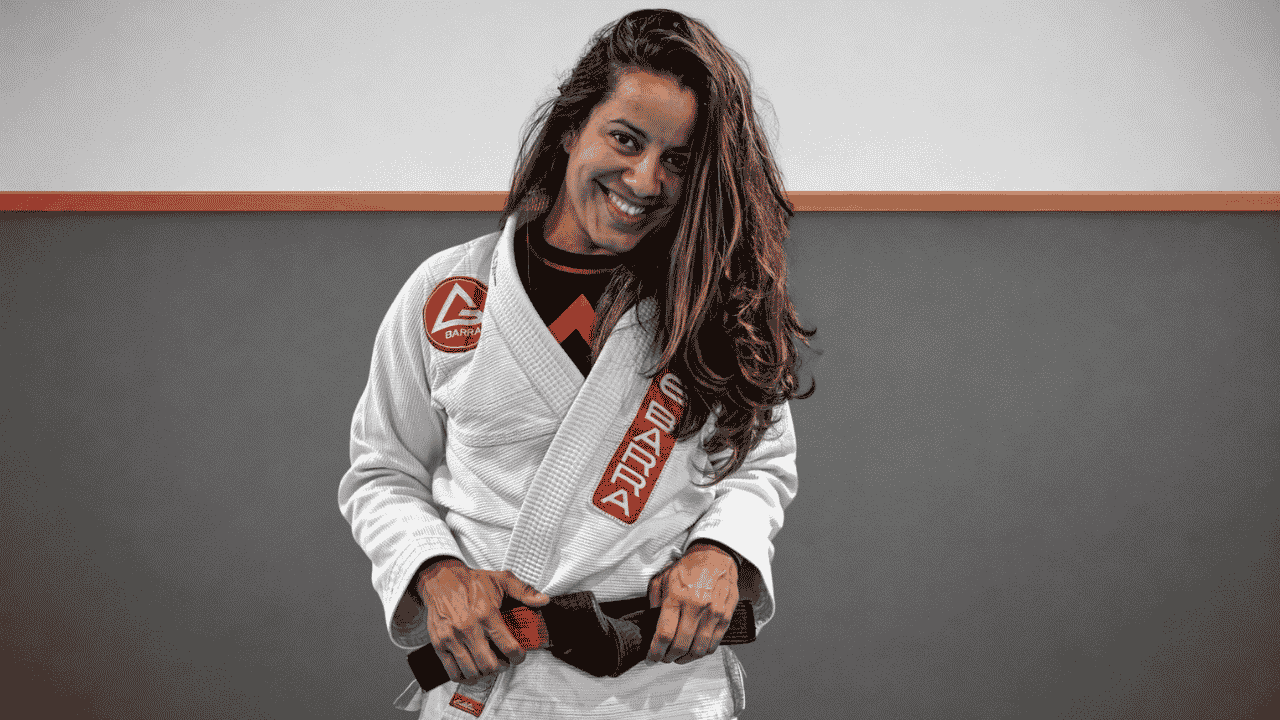
Fabiana Borges started jiu-jitsu at 11, in a social project in Cascadura, on Rio de Janeiro’s north side. Twenty-seven years later she is a fifth degree black belt, a six-time Brazilian champion and a two-time Pan American champion, and she runs four Gracie Barra schools in San Antonio, Texas. We sat down with her to talk about the whole road, from that first armlock to teaching at nine months pregnant.
BJJ Girls: You started jiu-jitsu at 11, in Cascadura, in a social project. What was that first contact with the mat like, and what did jiu-jitsu mean to the girl you were back then?
Fabiana: So, when I was 11, I was looking for a sport to do. I tried soccer, I tried running, volleyball, but nothing clicked with me. Then a social project opened near my house and my uncle took me and my cousin to train. In the first class I already felt a huge sense of empowerment in jiu-jitsu as a girl. I remember I pulled guard, swept, mounted, caught the arm. It was something I learned that day, and I still remember the feeling of my first armlock. It was a lot of empowerment, I liked it, and jiu-jitsu captivated me, it gave me that strength. It was a very striking moment, an 11-year-old girl looking for something to do, and it was really my own thing, wanting to do a sport. I took the registration form, went home, asked my father for 30 reais at the time to buy my kimono, signed up for jiu-jitsu, and from that day I never stopped. Jiu-jitsu has always been part of my life and it shaped who I am today.
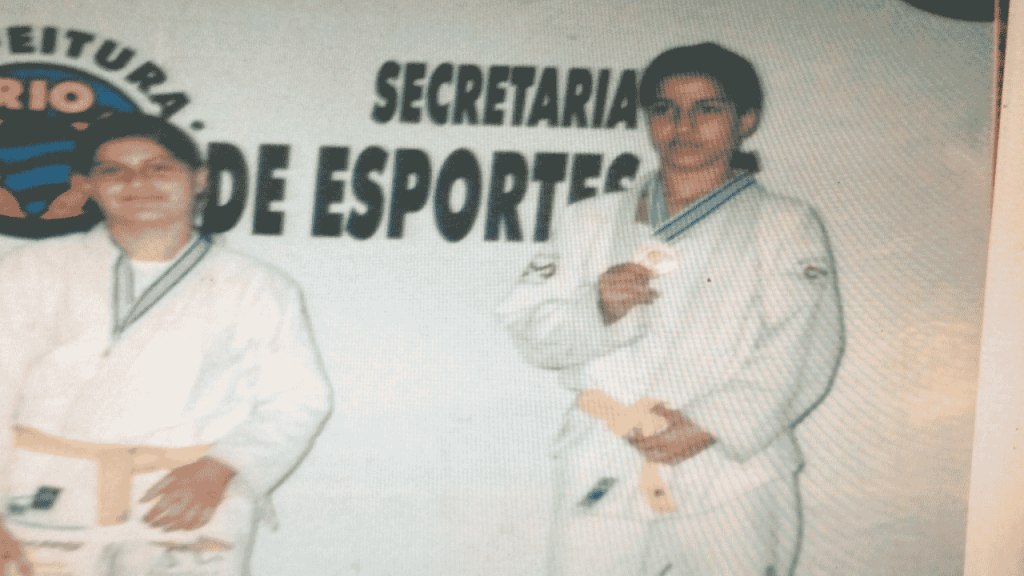
BJJ Girls: Back then, still in the late 90s and early 2000s, what was it like to be a girl training jiu-jitsu in Rio? Did you have other girls training with you, or were you almost always the only one?
Fabiana: I started training in 1999, a long time ago. When I started there were other girls training, and since it was a social project it ran in several areas of Rio de Janeiro, so there were some girls. But they always came and went, came and went, because jiu-jitsu was pretty tough, pretty hard back then. I remember a teacher always said everyone is the same, there’s no difference between man and woman, so I think only the toughest ones stayed, and most only went as far as blue belt. Since I started at 11, a lot of the girls were like 14, 15, and the kids would stay until yellow belt and the grown women until blue, with a lot of turnover. I think, and I’m not sure, that back then jiu-jitsu wasn’t inclusive for women, so you had to be the toughest girl or, unfortunately, the teacher’s girlfriend. But yes, there were some girls, very few. When I started training for competition, my training was men only, all boys, and if you cried on the mat you had to go to the bathroom, because most were boys. So it was a striking time. But to be honest, at 11 I didn’t see that difference, whether there were boys or girls. I never put the female label on myself, maybe because my teacher always said there’s no man or woman. So I didn’t see that discrimination, or that I was the only girl on the mat. To me I was the only fighter there and I trained with the boys, and that was normal. And what was normal in the 2000s? That everyone was a student, there was no boy or girl thing.
BJJ Girls: The social project pulled a lot of people out of a hard reality. Beyond the mat, how much would you say jiu-jitsu changed the course of your life?
Fabiana: Yes, the social project was a turning point in my life. Before I started jiu-jitsu I tried other sports, running, track, soccer, and nothing clicked the way it did, nothing gave me the confidence jiu-jitsu gave me. It was through the social project that I started traveling, that I got chances to compete, and it helped my confidence. And it pulled me out of that life in the favela where I grew up. I grew up in a community in Cascadura, and the girls were dating people from the drug trade. Jiu-jitsu kept me busy, gave me something to look forward to and a different future. So from that social project I started having other perspectives on life and getting to know new places that opened my horizons, my mind, to a different life outside the favela. I also earned a scholarship at a private school and started being around people who dreamed of joining the military or traveling, things I never dreamed of living in the favela. It was a huge turning point for me and for my perspective on life.
BJJ Girls: You were a two-time Pan American champion and a six-time Brazilian champion. Is there one of those titles that weighs more on your heart, that you remember in more detail to this day?
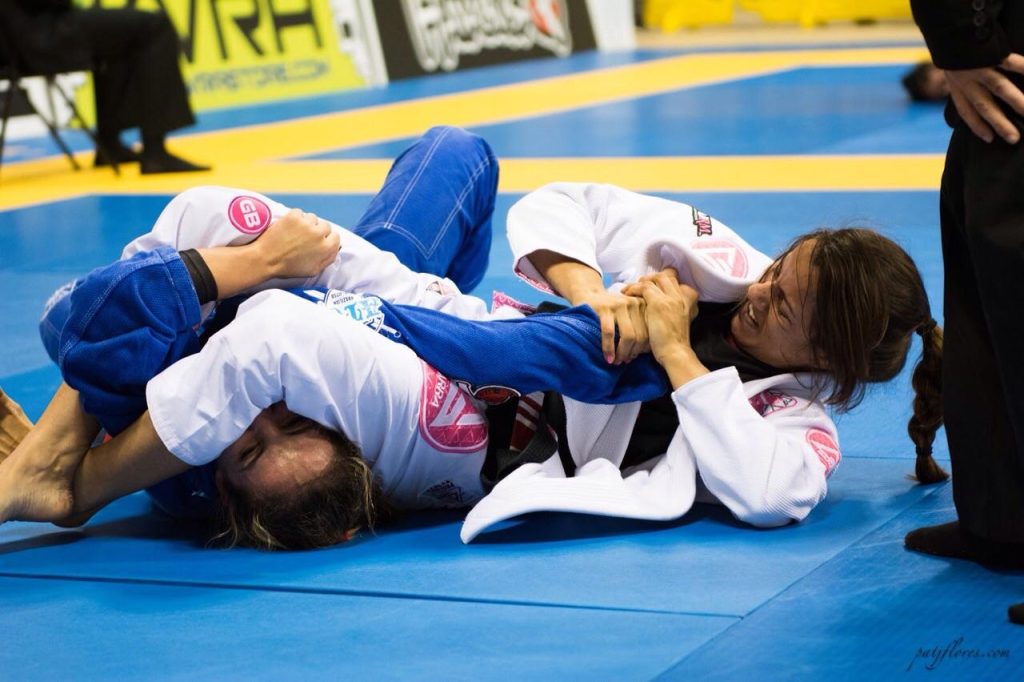
Fabiana: The Brazilian championships were always a lot of fun. I competed a lot in the kids’ divisions, yellow belt, and a lot at blue belt. Back then I don’t think I grasped what a Brazilian title meant. I was young and the thing was to fight, to win those titles so I could get out of where I came from, the favela life. And when I got the scholarship at the private school, I had to keep good results on the mat to keep the scholarship. So it was a way to fight to get out of where I came from. The Pan Americans were really special, because I was already living in the United States. If I’m not mistaken it was 2010 and 2011, and I was already a black belt, a moment when I was going through difficulties here in the US too, but I saw where I stood in jiu-jitsu, competed internationally and won, and it gave me much more confidence, showed me my jiu-jitsu was good. I think one year I fought Nicolini and won. Nicolini was already a star in jiu-jitsu, and if I’m not mistaken in MMA too, and I was on the rise in her career. They were really important titles in my career too.
BJJ Girls: You received your black belt in 2007, the same day you won your sixth Brazilian title. What was it like to live both things on the same day?
Fabiana: In 2007 I got my black belt on the podium at the Brazilian Nationals and it was a very special moment, first because I wasn’t expecting it, and second because I shared the podium with one of my best friends, Miriam Cardoso. I even have that photo if you want. It was really cool because we always competed against each other since yellow belt, so some years I won, some years she won, and that one I won. And the most interesting thing to me is that we competed and she was the first one to give me that hug. That showed me a lot that even your opponents on the mat don’t have to be your enemies. We built a really good friendship in life. She was the reason I came to the United States. It was really good to share that feeling with her. And yes, I won the Brazilian that year and then the black belt on the podium. I was 17 at the time, it was in May, if I’m not mistaken May 10, 2007. It was a really good feeling of achievement, and of seeing that the people fighting alongside me didn’t necessarily have to be my enemies, and they were rooting for me too.
BJJ Girls: You’re from a generation that opened the way for women’s competitive jiu-jitsu. Beyond walking that path, who were your inspirations back then?
Fabiana: I am, I’m old school. There are some people I remember. I worked a lot at CBJJ championships and I remember watching them fight, me as a purple belt, working as a coordinator if I’m not mistaken. So there are some people whose matches I can vividly remember. One was Poliana, I don’t remember her last name, but Poliana had really good jiu-jitsu and a very welcoming smile. Hannette, who was always an icon. Leka, who was also competing back then. And the one I’m the biggest fan of is Bianca Andrade. I remember Bianca Andrade fighting Poliana, and Bianca, at featherweight, caught Poliana in a beautiful armlock. So these women were definitely references for me, and today at Gracie Barra I have a lot of contact with Bianca, and I tell her she was the reason I came to Gracie Barra, because I was such a fan, her jiu-jitsu is beautiful, a guard player, a finisher, I drew a lot of inspiration from her. But Hannette too, I had the privilege of training directly with Hannette in Brazil and learning a lot from her. So it would be those, Leka, Hannette and Bianca inspired me a lot. Another one I fought was Letícia, she was also a big inspiration, but I didn’t have much direct contact with her. They were women I saw fighting and had the privilege of learning from and training with too.
BJJ Girls: Back then, did you have any idea you were building all of this, opening paths?
Fabiana: Man, that’s a really good question. No, I started jiu-jitsu very young, at 11. I had no idea I was sometimes the only woman on the mat, no idea that a lot of the jokes on the mat were sexist jokes. I also had a very sexist way of thinking that I had to change, work hard on. And no, I had no idea I was opening paths. I went as a fighter. Again, jiu-jitsu was an escape for me, to run from that favela life. So I had no idea I was being a pioneer in a lot of things. Moving to the business side, opening the academy as the only woman, I also didn’t think I was doing a big thing. I didn’t feel the sexism much, didn’t feel much that I was the only woman on the mat, because I think I started very young, so to me it was a normal thing, I’m doing a sport, we’re all bros, we’re all equal. But I believe it’s because I was very young and didn’t yet have the experience of women who start jiu-jitsu older. So on one hand I think it was even a good thing, because I didn’t experience the sexism, or I did but I didn’t know what sexism itself was, and I didn’t know I was opening doors for other women, inspiring other women. I feel very grateful and honored today to see my path and see that I really did open the way for other women not to suffer what I suffered. Thank God I was very young and didn’t know that was suffering. I don’t know if it makes sense, but that’s how I see it today.
BJJ Girls: From 2007 to now it’s many years of black belt, and you’re already a fifth degree. What changed in your relationship with jiu-jitsu, from the athlete who competed to the gym owner and professor you are today?
Fabiana: From 2007 to now there were a lot of changes. I moved from being an athlete, I was an athlete for a long time, from the start of my career until, I believe, 2023, when I competed for the last time, and I think 2024 too. But I did the university of jiu-jitsu. I was an athlete, I worked at Gracie Barra and learned about academy management, about how to teach, and moved to being a professor and athlete. And then I became a gym owner, and now I’ve been a gym owner for 10 years. So I feel very privileged to have gone through every category in the jiu-jitsu field, athlete, professor, academy manager and owner. Today I lead a team of 20 to 25 people, with four academies. And now I’m at the top of the leadership of the Gracie Barra schools too, when they need it.
BJJ Girls: Is there a lesson that only came with time at black belt, that you had no way to understand when you were younger?
Fabiana: I think a lesson I had at black belt, that I took into life, is to fight for yourself. When we’re in the lower belts, we worry a lot about the professor, about others, about other people’s opinions. And when we understand that it’s our daily fight to improve who we are on and off the mat, I think it improves our relationship with jiu-jitsu, that we’re not putting who we are into our results. We are who we are, regardless of the result. I don’t know if it makes sense, but I learned to fight for myself and for me, and not for others, like a professor or a student. And when I learned that, jiu-jitsu became more fun and more interesting for my evolution as a human being too.
BJJ Girls: Has anyone ever told you that you wouldn’t be able to achieve something in jiu-jitsu because you’re a woman? If so, tell us a bit about it.
Fabiana: Man, I was very blessed to have come to Gracie Barra as a black belt, and Gracie Barra being an academy that opens a lot of doors for female leadership. So, no, I never was. I did have one time a person who came to the academy to get information, and when they saw it was a woman, that it was a head instructor, they didn’t want to sign up. But today I also understand that there’s room for everyone, and there are people who are ok with it and people who don’t want it, who prefer an environment with a male leader, and that’s all fine. But no, I got very lucky and was very blessed to have come to Gracie Barra.
BJJ Girls: GB is huge and has a very defined method. What is it about that method that makes a difference when it comes to developing students, especially women?
Fabiana: I think having a method inside GB helps with this question of being female or male, because whoever is teaching has to have the charisma and has to use the GB method. And the method works for women, for men and for kids. So as long as you have the love and the charisma to teach, it doesn’t matter if it’s a woman teaching or a man teaching, we follow the methodology, we follow the GB structure, and it’s easier to get the jiu-jitsu message or a technique across to everyone. Actually, I think being a woman even helps reach a bigger audience, because usually a woman can teach kids, adults and the women’s class. A man sometimes doesn’t have as much of that touch, it’s not part of his culture to teach kids or women. There are women who prefer having class with a woman. So I think being a woman helps you reach a bigger audience even more. And of course there are men who don’t want class with a woman, and that’s all fine. But I like having female coaches and male coaches, men too. But the GB method helps keep it uniform and serve a bigger audience too.
BJJ Girls: You’re the first woman black belt to have a solo Gracie Barra school in San Antonio, and you run four academies. What is it like to carry that pioneering role?
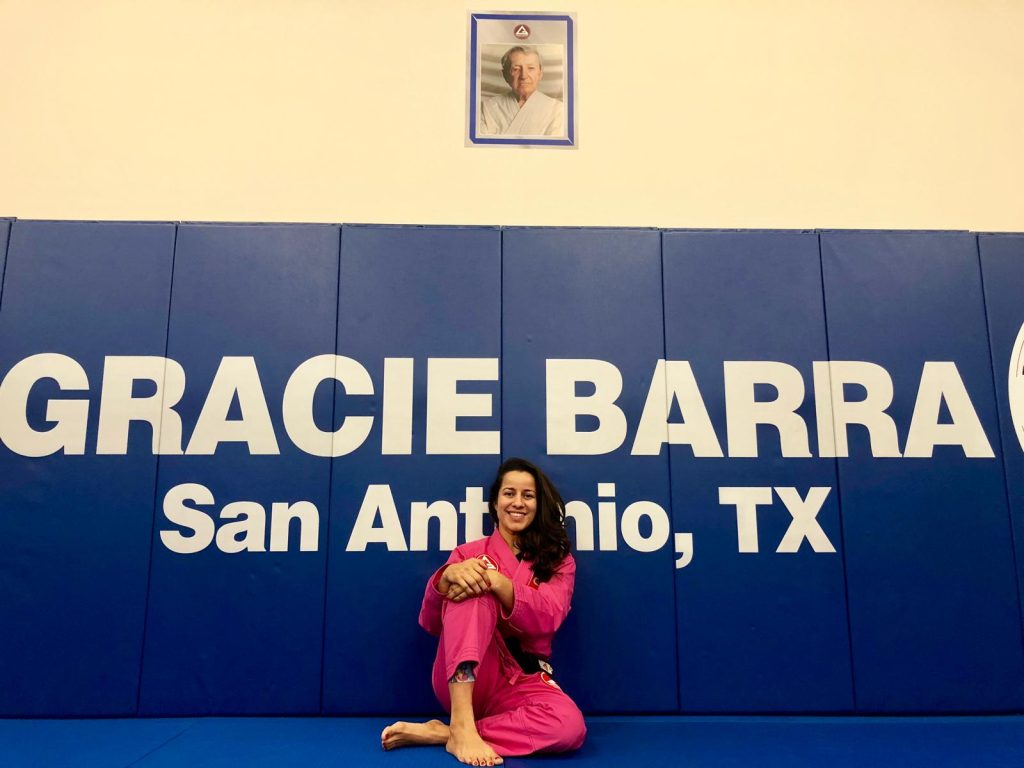
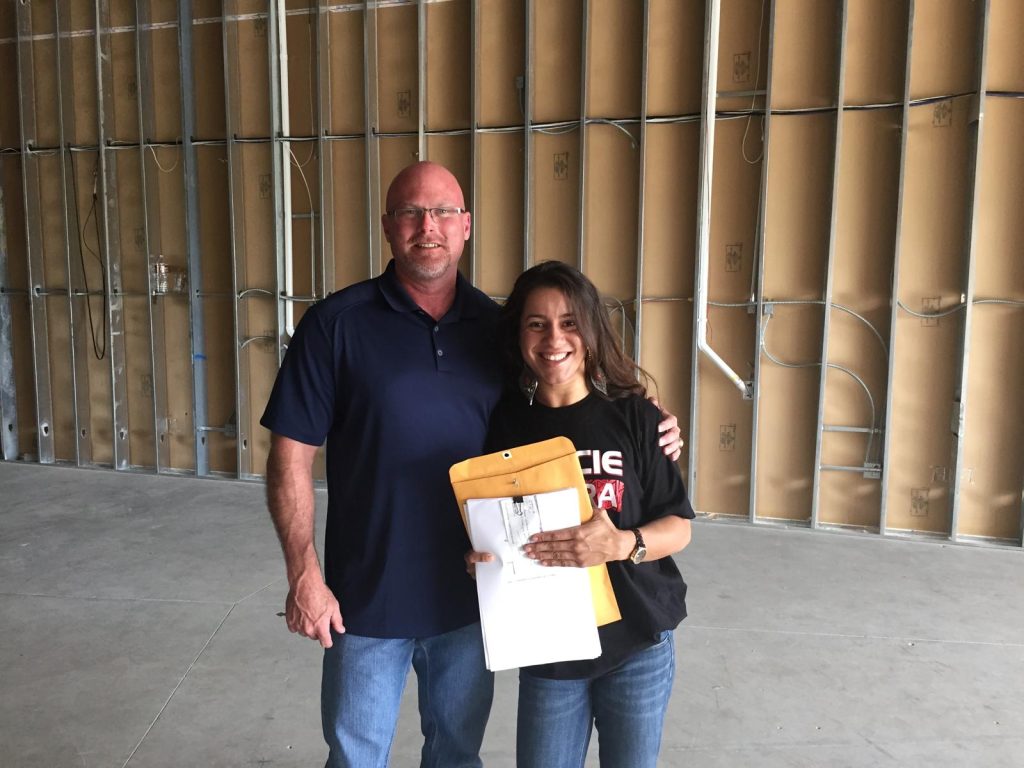
Fabiana: I was the first woman, if I’m not mistaken, in jiu-jitsu, to open a jiu-jitsu academy without a black belt man or a man in the academy’s administration. I had a partner and that partner was an investor, but he was never part of the academy. So, like I said, I wasn’t married to a black belt and I opened the academy. So, if I’m not mistaken, I was the first. Today I know women inside GB and outside GB who are gym owners and don’t have a husband, or don’t have an active husband inside the academy. But I think even worldwide, if I’m not mistaken, I was the first. Today we have four academies and I do have a partner, my student, my friend and professor, with a share in the academies. I feel very honored, and sometimes I talk to women who have this fear of opening the academy because they don’t have a husband involved in jiu-jitsu, or they’re afraid of rejection from the male students, and I think my story helps a lot of women get inspired. Today I see it was a big milestone. I understand that having a partner is much better, but it’s not impossible to do it alone. Having a team behind you, like I had Gracie Barra, having a method and class structure, helped me a lot. But that’s it.
BJJ Girls: You saw the women’s jiu-jitsu of Rio in the 2000s and you see the one now in the United States. In your opinion, what’s the best of both worlds, of the Brazilian jiu-jitsu culture and the US culture?
Fabiana: Man, jiu-jitsu in the 2000s was survival, I don’t know if I see anything good in that era. I think the good thing was the many women who survived it, but it was survival, it was you surviving the adversity of a dirty academy, of not having a welcoming academy. I think the best thing about that is that this reality made us resilient, so I’d say that’s the best of that era. I’m in love with the jiu-jitsu we have today, more far-reaching, more welcoming, more inclusive. I see women in my academy and in others who you might look at and say they wouldn’t train, maybe they’re much more feminine, or they have four, five kids, a husband, a career, and wouldn’t have time, but because the academies are more welcoming and more inclusive, they’re on the mat. And back in the day we trained to be a results machine. Today I see women training to gain confidence, to lose weight, to make friends, for the stress of everyday life. So I’m a huge fan of what we’re living now and of the jiu-jitsu I learned here in the United States. I believe Brazil is changing a lot too. But I’m in love with what we’re living now.
BJJ Girls: Today you’re pregnant and still leading the academies. How has it been to live jiu-jitsu in this phase, more in the role of professor and leader than athlete?

Fabiana: This is a new phase for me. Like I said, I went through all the stages inside jiu-jitsu. And today I’m nine months pregnant and still teaching. And once again I see how respect is built with your attitudes and with the legacy you built over your career. My students respect me, accept that I teach, and respect me on the mat for who I am, and not because I beat them up or train hard with them. They respect me and respect my history, what I built on the mat, what I built as a leader. And today I’m teaching just fine. Of course, I have a wonderful team that helps me run the academies, and I plan to stay off the mat a bit to enjoy this new phase of having a child. But thank God I built the team, the team is strong, which gives me that flexibility, that privilege of entering a new phase of being a mother. I hope to compete again, there are several women who inspire me, who are mothers, gym owners and who compete, so it’s not off my radar. But I competed from age 11, and I believe 2024 was my last competition. So I want to live this phase without rushing, without having to prove anything to anyone. And to be a mother, give the best of myself, like I always did in every phase of my life, as an athlete, professor, gym owner, leader. I want to be the best mother too and dedicate myself to that, without rushing to get back on the mats, and to do it for me, to compete again for me and not to prove anything to anyone.
BJJ Girls: For the girl who’s starting now, maybe coming from a reality like yours in Cascadura, what would you say?
Fabiana: I would tell the girls to be prepared, to prepare both in English and in jiu-jitsu, but to prepare for the opportunities, because God sends the opportunities, but sometimes we’re not ready, we’re not confident, and we lose one for lack of preparation. In life, preparation has to line up with the opportunities. And to believe there’s a way to make a living from jiu-jitsu. I’m living proof of that. There are other women, other girls, who today live only off this. It’s a sport that’s still growing, growing a lot, but be well prepared. On the mat, learning to teach, not only to compete, but also to teach, and grab the opportunities life gives, don’t be afraid to grab them and grow with life’s lessons. Sometimes we believe that a loss, something that didn’t happen, is a defeat, but if we change that and see it as learning, the growth is much, much bigger.
Fabiana, we have deep respect for your journey and for helping pave the way for so many other women in Brazilian Jiu-Jitsu. Everyone at BJJ Girls Mag wishes you a long, healthy life and continued success as you keep achieving even more in this sport that changes lives.