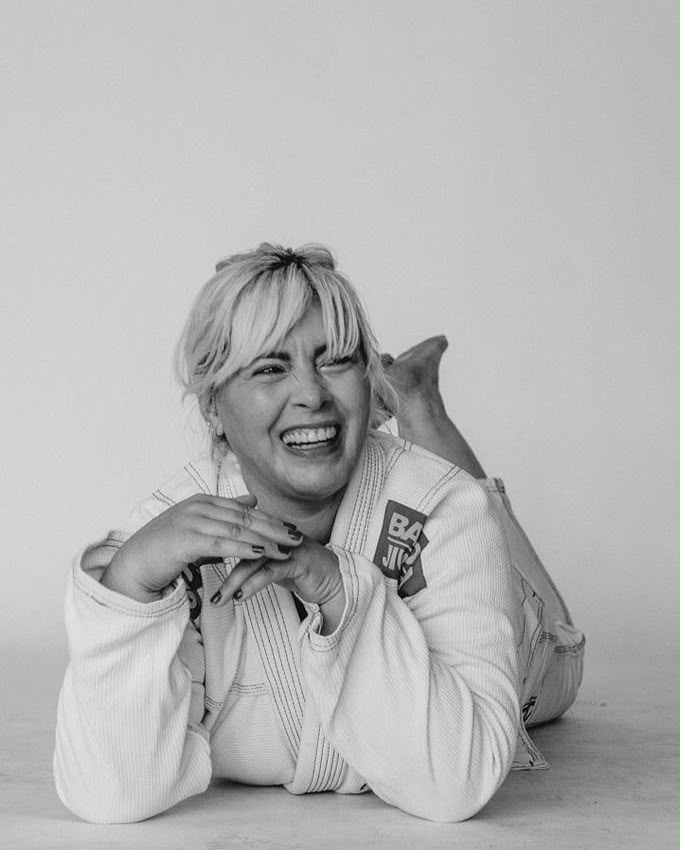
Half the stress of a first BJJ class has nothing to do with the techniques. It’s standing in front of your closet an hour before, wondering if leggings are okay, whether you need to buy a gi before you’ve even tried the sport, and what on earth goes under all of it. We coach beginners every week, so here’s the answer we give every new woman who walks in, exactly as we’d say it to a friend.
The short answer
Wear fitted athletic clothes you can move in: a fitted t-shirt or rashguard on top, leggings or athletic shorts on the bottom, a no-hardware sports bra underneath, and flip flops for walking off the mats. Don’t buy a gi yet. Almost every gym lends loaner gis for trial classes, so ask when you book. That’s genuinely it, and if you stopped reading here you’d be fine.
The longer version depends on whether your first class is gi or no-gi, so check which one you booked and read the matching section.
If your first class is a gi class
Call or message the gym and ask for a loaner gi, which nearly all schools keep for exactly this. Under the gi, wear a fitted rashguard or a snug athletic shirt plus a compression-style sports bra with no hooks, clasps or zippers, since anything rigid turns into a pressure point the first time someone leans on you. On the bottom, leggings or fitted shorts go under the gi pants and save you awkwardness if the drawstring loosens.
If you already know you’ll stick with it and want your own gi from day one, our women’s gi guide and sizing guide cover fit for real female bodies, including curvy cuts. Still, there’s no shame in a loaner for class one.
If your first class is no-gi
No-gi is simpler: a rashguard or fitted athletic top, plus leggings, grappling spats or athletic shorts. The key word everywhere is fitted. Baggy shirts get tangled in grips and end up strangling you, and loose shorts with pockets catch fingers and toes, which hurts everyone involved. If you train in leggings, thicker is better, because thin fashion leggings go see-through the moment you bridge. Our leggings and spats guide breaks down what survives.
What goes in the bag
- Flip flops or slides, because bare feet touch only the mats, never the bathroom floor
- Water bottle, bigger than you think you need
- Hair ties, at least two, plus a spare because one always snaps
- A small towel
- Deodorant and a fresh shirt for after
If your hair is long, a braid survives grappling far better than a ponytail, and low buns get crushed the first time you’re on your back. Two french braids is the unofficial uniform of women’s BJJ for a reason.
What to leave at home
All jewelry comes off: rings, earrings, necklaces, bracelets, smartwatches, everything. It scratches partners, snags on the gi, and rings can genuinely injure your own fingers under grip pressure. Trim your nails, fingers and toes, since long nails cut people. Skip perfume and heavy makeup, which end up smeared on other people and their gis. And skip anything with zippers, buttons, hooks or pockets, which covers most streetwear.
One honest note about how you’ll feel
Whatever you wear, you’ll probably still feel a little exposed the first time, because grappling is closer contact than any sport most of us grew up with. Good fitted gear helps more than you’d expect, and so does knowing that everyone on that mat had a first day too. If you’re still choosing where to train, our guide on choosing your first BJJ academy as a woman is the place to start, because the right gym matters more than the right outfit.
Frequently asked questions
Can I wear just leggings and a t-shirt to my first class?
Yes, as long as the shirt is fitted and the leggings are thick enough to pass a squat test. That combo covers your first weeks of no-gi fine.
Do I need to buy a gi before my first class?
No. Ask the gym for a loaner when you book. Buy your own once you know you’re staying, and buy a women’s cut when you do, because unisex gis are drawn on male proportions and the fit shows it.
What sports bra should I wear for BJJ?
A compression pullover with no hooks, clasps or zippers. Support matters less than staying put under pressure. We wrote a full sports bra guide for grappling with the details.
Can I train in a regular baggy t-shirt?
You can, but you’ll regret it by the second drill. Baggy fabric bunches under grips, rides up, and gets caught between you and your partner constantly.
What do I do with my wedding ring?
Leave it home or zip it in your bag. Rings under grip pressure can hurt your finger badly, and most gyms won’t let you roll with one anyway.
The bottom line
Fitted athletic clothes, a no-hardware sports bra, flip flops, hair ties and a water bottle get you through class one with zero gear purchases. Wondering what actually happens once you’re dressed and on the mats? That’s the next article in this series: your first BJJ class, what to expect.
For gear guides tested by women who train, follow us on Instagram @bjjgirlsmag_usa.