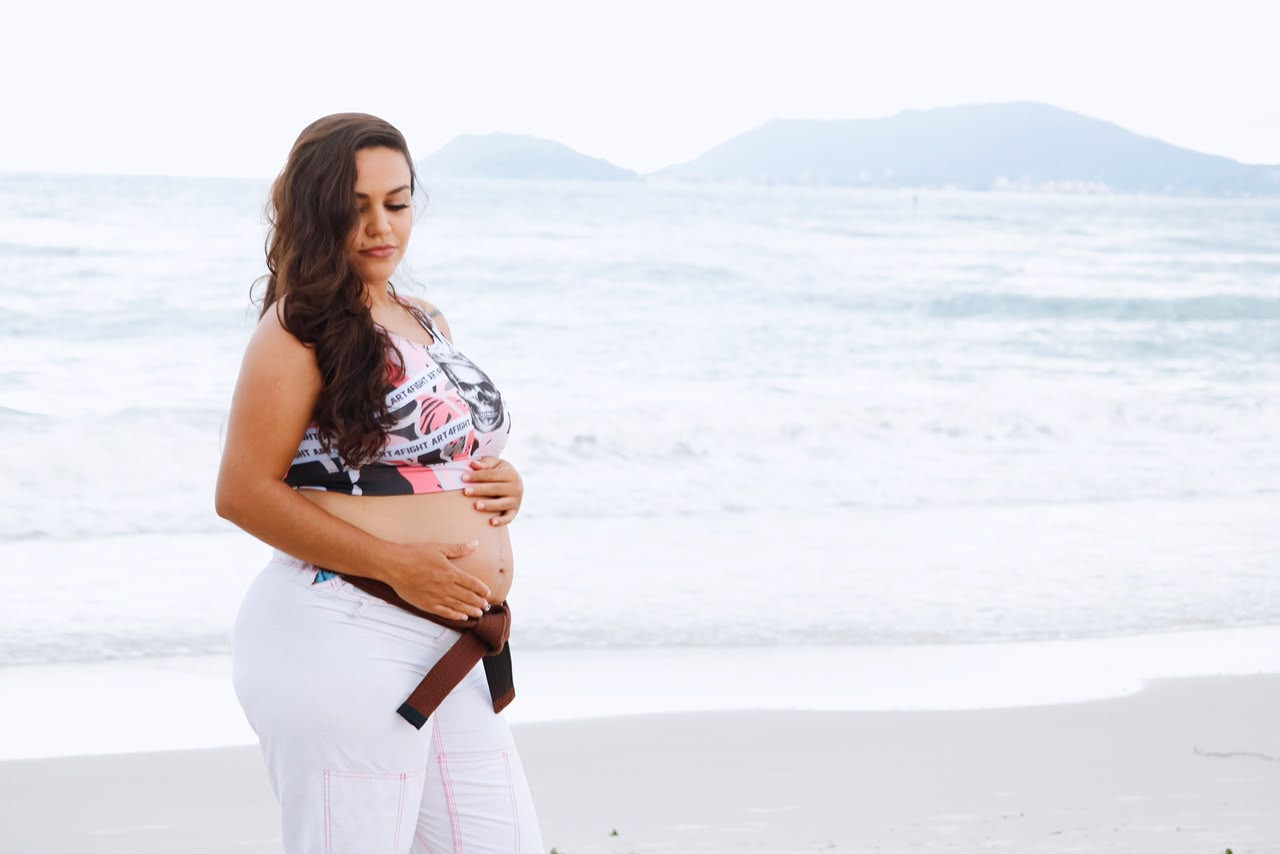
This article is general information, not medical advice. Every pregnancy is different, so talk to your own doctor or OB before you make any decision about training.
Seeing two lines on a test changes a lot of things at once, and if you train, one of the first questions in your head is usually about the mats. Can you keep rolling? Should you stop? Is drilling okay? The honest answer is that it depends on you, your pregnancy and your doctor, and no blog can replace that conversation.
What we can do is give you a clear, no-drama map of how most women in jiu-jitsu think through pregnancy, trimester by trimester, so you walk into that doctor visit already knowing the right questions to ask.
The one rule that comes before everything
Before any of the trimester advice below, the same rule applies the whole way through: your doctor decides, not your coach and not the internet. Bring up jiu-jitsu specifically, because “exercise” and “a contact grappling sport where a training partner puts their weight on you” are two very different conversations.
For context, medical guidance like the American College of Obstetricians and Gynecologists encourages staying active in a healthy pregnancy, and it also flags contact sports and any activity with a high risk of falling or getting hit as ones to avoid. Live BJJ rolling sits squarely in that second group, which is why most doctors ask women to stop sparring once they know they are pregnant.
First trimester
This is the window where most women step away from live rolling, often the day they find out. The risk that worries doctors is not just impact, it is also the intensity, the pressure and the unpredictability of another body moving against yours. On top of that, first-trimester fatigue and nausea can flatten your energy anyway.
If your doctor clears light movement, this is a good time to keep your body familiar with jiu-jitsu without any contact: solo drills, hip escapes, technical stand-ups, breakfalls kept gentle, and mobility work. You stay sharp on movement patterns while taking the sparring risk to zero.
Second trimester
Energy often comes back here, which is exactly when it gets tempting to do more than you should. Two things change your body mechanics now. Your center of gravity shifts forward as the belly grows, which affects balance, and lying flat on your back for long stretches is usually discouraged because the weight can press on a major vein. Contact is off the table for the same reasons as before.
Plenty of women stay connected to the gym in this phase through solo drilling, mobility, walking, swimming and doctor-approved strength work, and by coaching or watching class so they keep their head in the game. Staying part of the community matters more than most people expect.
Third trimester
This stretch is about rest, breathing and getting ready, not training goals. Gentle mobility, pelvic floor work and staying generally active if your doctor approves is plenty. Mentally, this is a good time to make peace with the pause and start picturing your return, because coming back is its own journey.
What to do instead of rolling
Stepping off live training does not mean leaving jiu-jitsu. With your doctor’s okay, you can keep solo movement drills in your routine, work mobility and breathing, do cleared strength training, teach or help coach, and study film. None of it carries the fall or impact risk of a real roll, and all of it keeps you in the sport.
When to stop and call your doctor right away
Whatever your doctor cleared, stop immediately and call them if you notice bleeding, cramping, regular contractions, fluid leaking, dizziness, chest pain, trouble breathing or your baby moving less than usual. When something feels off, you rest first and ask questions second.
The part nobody warns you about
Stepping back from training can hit harder than the physical side. Jiu-jitsu is identity and community for a lot of women, and watching from the side of the mat while your body changes is a real kind of grief. It helps to remember the pause is temporary, to stay in the gym socially, and to know that the mats will be there when you are ready. When that day comes, our returning to BJJ postpartum guide walks you through coming back the smart way.
Frequently asked questions
Can I keep rolling while pregnant?
Most doctors advise stopping live sparring once you know you are pregnant, because of the fall, impact and pressure risk. Your own doctor has the final say for your situation.
Is drilling safe during pregnancy?
Solo, no-contact drilling is what many women keep doing with medical clearance, since it removes the risk that comes from a resisting partner. Anything involving another body pressing on you is a different conversation with your doctor.
Can I compete while pregnant?
Competition means full-intensity rolling against a stranger, which is the highest-risk version of the sport, so it is not recommended during pregnancy.
When should I stop training?
Most women stop live rolling as soon as they find out and shift to no-contact work. The exact timeline for any modified movement is a call for you and your doctor.
Will I lose all my progress?
You will feel rusty when you return, and that fades faster than you think. Your understanding of the game does not disappear, and the muscle memory comes back with mat time.
The bottom line
Jiu-jitsu and pregnancy can coexist, as long as live rolling steps aside and your doctor leads every decision. Keep the movement you are cleared for, protect the risk down to zero, stay part of your gym, and treat the pause as a season rather than an ending.
For honest guides on training through every season as a woman, follow us on Instagram @bjjgirlsmag_usa.